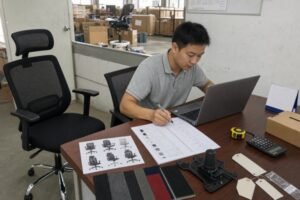
Height adjustable desks are everywhere now. Many suppliers promise low prices and fast delivery. Still, many buyers face quality issues after placing large orders. I have seen buyers receive unstable frames, damaged desktops, and delayed shipments. These problems hurt margins and customer trust.
A good height adjustable desk should do more than move up and down. It should meet safety standards, last for years, and fit different market needs. Buyers should check materials, lifting systems, certifications, packaging, and supplier experience before confirming an order.
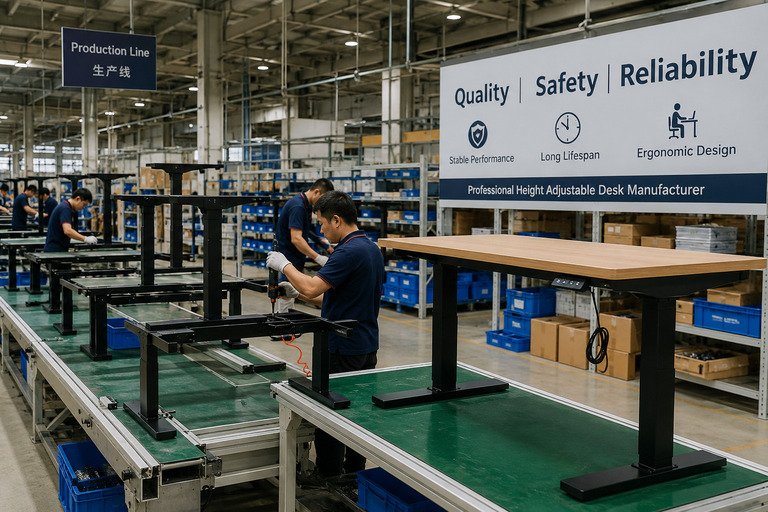
The market for standing desks keeps growing in North America and Europe. More companies now support healthy office environments. Remote work also pushes demand higher. Because of this trend, many new factories entered the market. Some factories offer strong OEM and ODM support. Others only focus on low-cost production. I always suggest checking every important detail before signing a contract.
Why Frame Stability Matters Most
Many buyers first compare prices. I understand this because competition is strong. Still, I always believe frame stability should come first. A cheap desk with shaking problems creates returns and negative reviews very quickly.
Check the Steel Thickness
Frame material directly affects stability. I often recommend checking steel thickness before discussing price. Thin steel lowers production cost, but it reduces durability.
| Component | Recommended Thickness | Risk of Thin Material |
|---|---|---|
| Desk legs | 1.5mm–2.0mm | Wobbling |
| Cross beam | 1.2mm–1.8mm | Weak support |
| Foot base | 2.0mm+ | Poor balance |
Many factories only mention “heavy-duty frame” in catalogs. I prefer asking for detailed engineering drawings. A reliable supplier should provide them quickly.
Test the Desk at Maximum Height
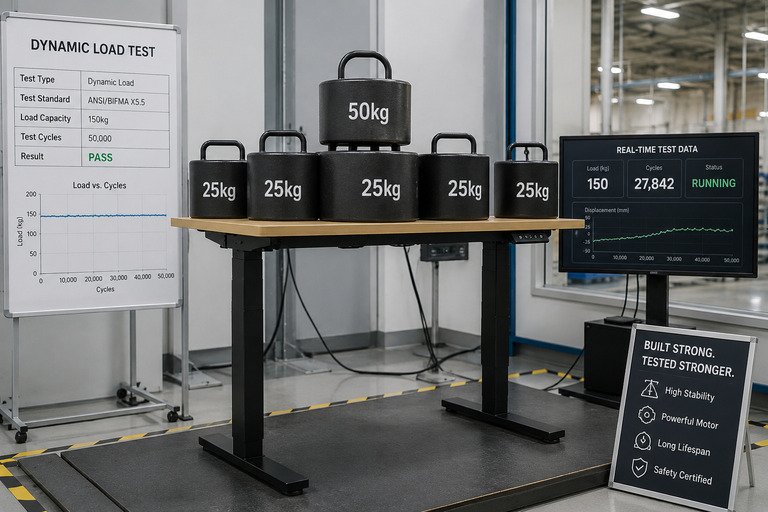
Some desks look stable at sitting height. Problems appear when the desk reaches standing height. I once tested a sample that shook badly after 110cm. The factory still claimed it passed internal tests.
Buyers should ask suppliers for stability videos with monitors placed on the desktop. This gives a more realistic view. If possible, third-party testing is even better.
Ask About Weight Capacity
Weight capacity affects different customer groups. Home users may use one monitor. Corporate buyers may use dual monitors and accessories.
Most good electric standing desks support:
- 80kg for entry-level models
- 100kg–120kg for mid-range desks
- 150kg+ for premium desks
Factories should provide dynamic load test reports1, not only static load claims.
Motor Quality Can Decide Product Lifespan
Motor systems create the user experience. Poor motors cause noise, uneven lifting, and early failures. I think this is one of the most overlooked areas during sourcing.
Single Motor vs Dual Motor
Entry-level desks often use single motors. These systems cost less but have limitations.
| Motor Type | Advantages | Disadvantages |
|---|---|---|
| Single motor | Lower cost | Slower speed |
| Dual motor | Better stability | Higher cost |
| Triple motor | Supports large desks | More complex |
For commercial projects, I usually recommend dual motor systems. They offer smoother lifting and longer lifespan.
Check Noise Levels
Noise matters more than many buyers expect. Open offices and home offices both need quiet operation.
A good electric desk should stay below 50dB during movement. Buyers should request test videos recorded in quiet environments.
Review Motor Certifications
Reliable motors usually carry certifications such as:
These certifications improve market access. They also reduce compliance risks during customs clearance.
Ask About Warranty Terms
Warranty terms reveal supplier confidence. I often compare warranty periods before choosing a manufacturing partner.
| Component | Common Warranty |
|---|---|
| Frame | 5 years |
| Motor | 3–5 years |
| Control box | 2–3 years |
Suppliers offering very short warranties may expect future problems.
Desktop Materials Affect Customer Satisfaction
The desktop is the first thing users touch every day. Surface quality strongly affects customer reviews.
Common Desktop Materials
Different markets prefer different materials. North American buyers often choose thicker desktops. European buyers sometimes prefer eco-friendly materials.
| Material | Features | Common Markets |
|---|---|---|
| MDF | Affordable | Global |
| Particle board | Budget option | Entry-level |
| Bamboo | Eco-friendly | Premium |
| Solid wood | High-end appearance | Luxury markets |
I usually recommend moisture-resistant boards for humid markets6.
Check Edge Finishing
Poor edge finishing causes peeling after several months. Buyers should inspect:
- Edge sealing quality
- Corner smoothness
- Surface scratch resistance
- Color consistency
I once saw a shipment rejected because desktop colors varied between batches. Since then, I always suggest requesting color consistency reports.
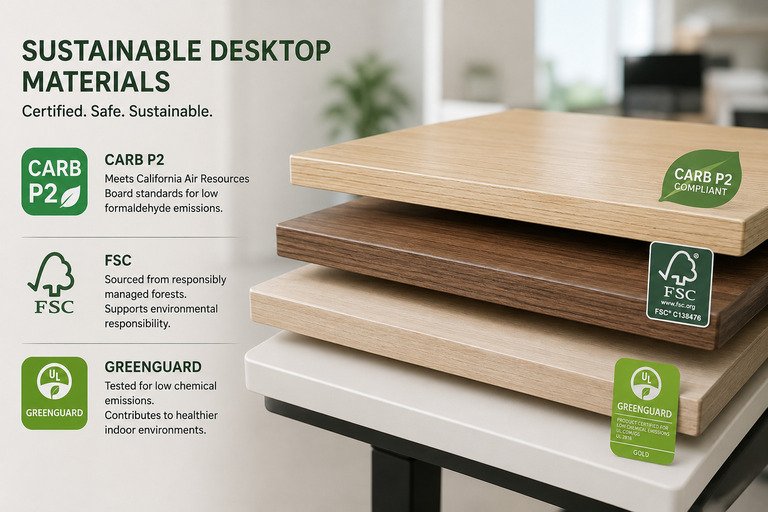
Ask for Environmental Certifications
Many corporate clients now require sustainable materials.
Important certifications include:
These certifications improve competitiveness in developed markets.
Buyers Should Evaluate OEM and ODM Capabilities
Customization is becoming more important every year. Retailers and brand owners want unique products instead of generic models.
Review Existing Projects
I always ask factories for previous OEM cases. Experienced suppliers usually show:
- Customized logos
- Different desktop sizes
- Special packaging
- Unique frame colors
This helps buyers understand production flexibility.
Understand MOQ Requirements
MOQ affects inventory pressure. Some factories require large volumes for customization. Others support smaller trial orders.
| Customization Type | Typical MOQ |
|---|---|
| Logo printing | 50–100 pcs |
| Custom color | 100–300 pcs |
| New mold design | 500+ pcs |
Flexible MOQ support is very important for new brands.
Confirm Lead Times
Lead time problems can destroy seasonal sales plans. I always recommend checking:
- Sample lead time
- Mass production lead time
- Peak season capacity
- Spare parts availability
A reliable supplier should communicate delays early instead of making unrealistic promises.
Packaging and Logistics Should Never Be Ignored
Many buyers focus only on production quality. Still, poor packaging can ruin products before they arrive.
Check Carton Strength
Standing desks are heavy products. Weak cartons create damage during shipping.
Suppliers should use:
- Thick export cartons
- Foam protection
- Corner protectors
- Strong pallet wrapping
I often request drop-test videos before approving packaging.
Optimize Container Loading
Efficient loading reduces shipping costs.
| Container Type | Approximate Capacity |
|---|---|
| 20FT | 180–220 desks |
| 40HQ | 450–550 desks |
Factories with logistics experience can improve loading plans and reduce freight costs.
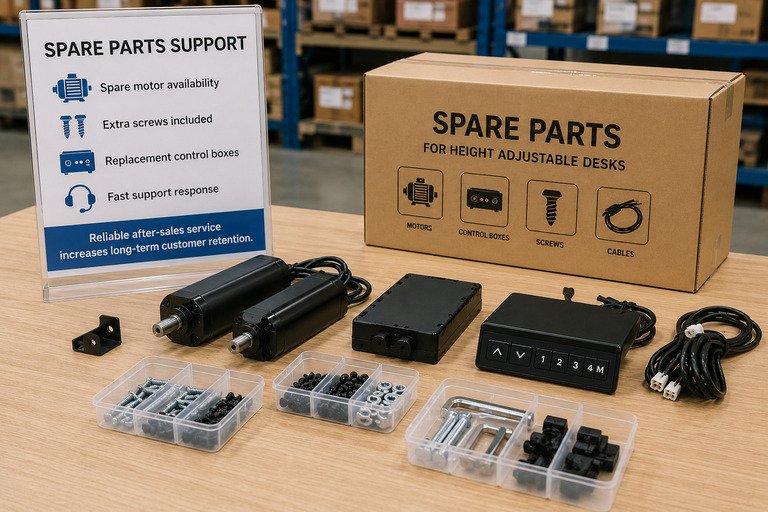
Ask About Spare Parts Support
Missing spare parts create expensive after-sales problems. Buyers should confirm:
- Spare motor availability
- Extra screws included
- Replacement control boxes
- Fast support response
Reliable after-sales service increases long-term customer retention.
Factory Audits Help Reduce Sourcing Risks
I believe factory audits are one of the smartest investments before mass production.
Verify Production Experience
Some trading companies present themselves as factories. Buyers should verify:
- Production lines
- Welding workshops
- Powder coating systems
- Assembly areas
Experienced factories usually maintain better process control.
Inspect Quality Control Systems
Good suppliers should have:
- Incoming material inspection
- In-line production checks
- Final product testing
- Packaging inspection
I often ask for QC reports from previous orders.
Review Export Experience
Export experience matters because international standards vary by market. Factories with mature export systems usually understand:
- Compliance documents
- Labeling requirements
- Shipping procedures
- Customs paperwork
This reduces shipment delays and communication issues.
Conclusion
Ordering height adjustable desks is not only about finding the lowest price. Buyers should carefully review frame stability, motor quality, desktop materials, certifications, OEM capability, packaging, and factory management. I always believe long-term supplier reliability matters more than short-term savings.
A strong supplier relationship can improve product quality, reduce claims, and support future business growth. Careful sourcing decisions today can protect your brand reputation for years.
"[PDF] ANSI/BIFMA X5.5-2014 Desk/Table Products", https://store.accuristech.com/products/preview/1876322?srsltid=AfmBOoplGwnnmNrOy1bLhAhdf6xn1CAfmFn_2SU3D9BO43eWfN0H67l0. Furniture and actuator testing standards distinguish between static loading and operational or cyclic loading, supporting the recommendation to review dynamic load evidence for motorized desks. Evidence role: expert_consensus; source type: institution. Supports: Buyers should request dynamic load test reports rather than relying only on static load claims.. Scope note: The relevant standard may specify test procedures rather than using the exact phrase “dynamic load test report.” ↩
"CE marking - Wikipedia", https://en.wikipedia.org/wiki/CE_marking. The European Commission states that CE marking indicates a product has been assessed by the manufacturer as meeting applicable EU safety, health, and environmental protection requirements and is required for products covered by EU rules before they are placed on the EEA market. Evidence role: definition; source type: government. Supports: Reliable motors used in electric height-adjustable desks may carry CE marking to demonstrate conformity with applicable EU regulatory requirements and support market access.. Scope note: CE marking indicates regulatory conformity for applicable EU legislation; it is not, by itself, a general product-quality certification or proof of independent third-party testing. ↩
"Current List of NRTLs | Occupational Safety and Health ...", https://www.osha.gov/nationally-recognized-testing-laboratory-program/current-list-of-nrtls. UL certification is issued by a recognized safety testing and certification body and indicates that relevant product components have been evaluated against applicable safety standards, supporting its use as evidence of electrical product compliance. Evidence role: definition; source type: institution. Supports: Reliable motors used in electric height adjustable desks usually carry certifications such as UL, which can improve market access and reduce compliance risks.. Scope note: The source would support the meaning and compliance relevance of UL certification generally, not prove that every reliable standing-desk motor carries UL certification. ↩
"Equipment Authorization – RF Device | Federal Communications ...", https://www.fcc.gov/oet/ea/rfdevice. The FCC’s equipment authorization rules state that radiofrequency devices must be properly authorized before they are marketed or imported in the United States, supporting FCC compliance as a relevant market-access consideration for electronic standing-desk control components. Evidence role: general_support; source type: government. Supports: Reliable motor systems for electric standing desks may require recognized compliance certifications such as FCC authorization, which can improve market access and reduce compliance risks.. Scope note: FCC authorization addresses U.S. radiofrequency-emissions compliance; it does not by itself prove motor durability or overall product reliability, and may not apply to purely non-RF motor assemblies. ↩
"RoHS Directive - Department of Toxic Substances Control", https://dtsc.ca.gov/universalwaste/rohs-directive/. Directive 2011/65/EU, as described by official EU sources, restricts specified hazardous substances in electrical and electronic equipment placed on the EU market, supporting the relevance of RoHS compliance for motorized standing-desk components and related market-access risk. Evidence role: general_support; source type: government. Supports: RoHS is an important compliance certification for electric standing desk motors, and such certifications can improve market access and reduce compliance risks.. Scope note: This supports RoHS as a regulatory compliance requirement for electrical/electronic equipment in relevant markets, but it does not by itself prove that all reliable desk motors usually carry RoHS certification. ↩
"Dimensional stability of board manufactured with wood-based panel ...", https://bioresources.cnr.ncsu.edu/resources/dimensional-stability-of-board-manufactured-with-wood-based-panel-laths/. Wood-composite materials research shows that moisture exposure can cause swelling, dimensional change, and degradation in MDF and particleboard, supporting the use of moisture-resistant boards in humid climates. Evidence role: mechanism; source type: paper. Supports: Moisture-resistant boards are preferable for humid markets.. Scope note: The evidence supports material behavior generally; performance depends on board grade, edge sealing, coating, and exposure conditions. ↩
"Formaldehyde Emission Standards for Composite Wood Products", https://www.epa.gov/formaldehyde/formaldehyde-emission-standards-composite-wood-products. California Air Resources Board regulations set formaldehyde emission limits for composite wood products, supporting the relevance of CARB Phase 2 compliance for desktops made from MDF or particleboard. Evidence role: definition; source type: government. Supports: CARB P2 is an important environmental certification or compliance requirement for composite-wood desk materials.. Scope note: CARB P2 addresses formaldehyde emissions from composite wood; it does not by itself verify overall sustainability or product durability. ↩
"Forest Stewardship Council - Wikipedia", https://en.wikipedia.org/wiki/Forest_Stewardship_Council. The source explains that FSC certification identifies forest products sourced according to recognized environmental and social standards, supporting its inclusion among relevant sustainability certifications for desk materials. Evidence role: definition; source type: institution. Supports: FSC is an important environmental certification for desktop materials because it indicates wood or forest-based materials are sourced according to recognized sustainability standards.. Scope note: This supports FSC as a sustainability certification, but does not by itself prove that FSC certification increases sales competitiveness in every developed market. ↩