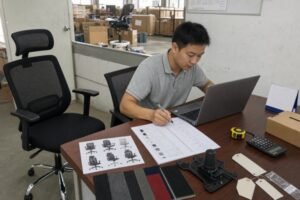
A Practical Capacity Verification Guide for Office Chair Buyers A factory may promise fast delivery, but an unverified capacity figure can cause delays, split shipments, and stock shortages.
I verify office chair production capacity by checking actual output on a specific working day, confirming the number of active production lines, and multiplying normal daily output by realistic working days and utilization.
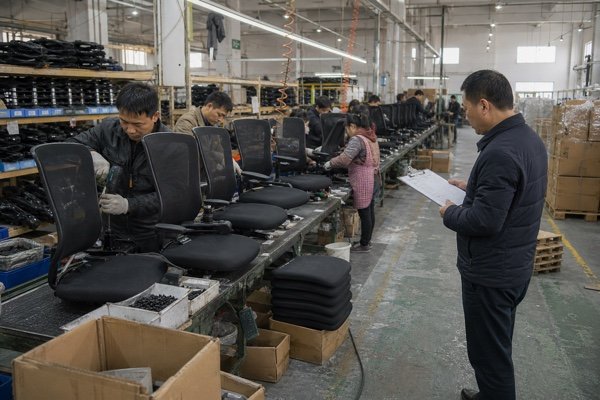
A monthly capacity claim only becomes useful when I can trace it back to workers, equipment, production records, and finished chairs.
Why Should Buyers Verify Office Chair Factory Capacity?
An impressive monthly figure may hide outsourced production, inactive lines, material shortages, or capacity already reserved for other customers.
Buyers should verify capacity because the factory's advertised maximum does not always represent the quantity it can reliably produce for a specific order.
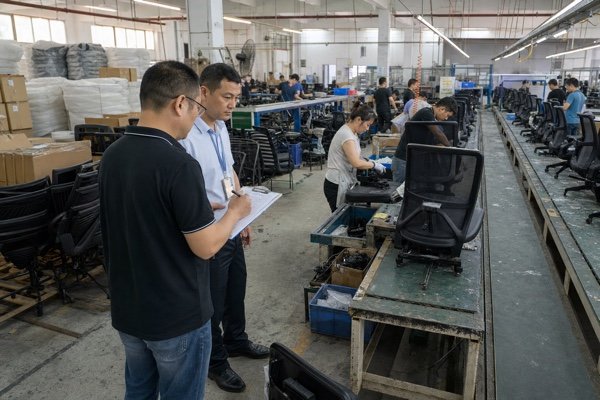
Rated Capacity Is Not the Same as Available Capacity
I separate three capacity figures during supplier evaluation:
| Capacity Type | What It Means | Main Buyer Risk |
|---|---|---|
| Rated capacity | Theoretical output under ideal conditions | Often used as a sales figure |
| Actual capacity | Output achieved during normal production | Can change by chair model |
| Available capacity | Output still available after current orders | Determines the real delivery date |
A factory may state that it produces 100,000 chairs per month. However, that number may assume every line is running at full speed for 26 days. It may also include subcontracted products or simple models that require less assembly time.
I therefore ask how much capacity is already occupied. If the factory has confirmed orders for 80,000 chairs, its remaining capacity may be only 20,000 chairs. A new order for 30,000 units could then require overtime, outsourcing, or a longer delivery schedule.
I also check whether the factory is measuring complete packed chairs or only chair components. Producing 5,000 bases is not equal to completing 5,000 chairs. A finished office chair still requires upholstery, assembly, inspection, packing, and warehouse handling.
This distinction protects me from accepting a delivery promise based on an incomplete production stage.
How Can I Calculate Monthly Office Chair Production Capacity?
A factory's monthly claim is difficult to judge until I convert observed production into a simple, repeatable calculation.
I calculate practical monthly capacity as normal daily output per line multiplied by active lines, working days, and a realistic utilization rate.
Use One Specific Production Day as the Starting Point
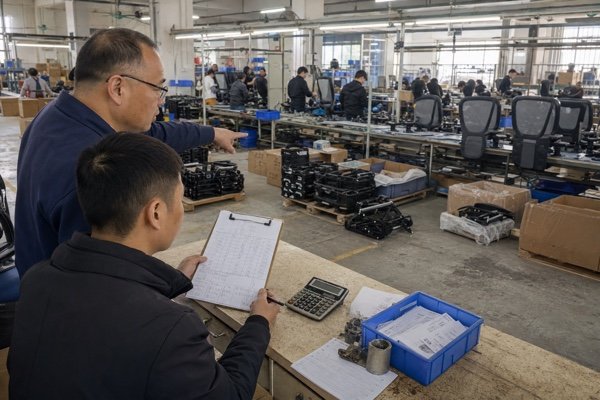
I start with a specific date instead of asking only, “What is your monthly capacity?” I prefer a normal working day that is not a factory-arranged demonstration day.
I record:
- Chair model produced
- Shift start and finish times
- Number of active lines
- Number of workers on each line
- Quantity entering final assembly
- Quantity passing final inspection
- Quantity packed before the shift ends
- Rework and rejection quantities
- Downtime during the shift
Suppose I observe four active lines. Each line produces about 1,050 packed chairs during a full working day.
The theoretical calculation is:
1,050 chairs × 4 lines × 26 working days = 109,200 chairs per month
I do not treat 109,200 chairs as guaranteed output. Production lines lose time because of model changes, maintenance, worker absence, material delays, quality rework, and packing changes.
If I use a 92% utilization rate:
109,200 chairs × 92% = 100,464 chairs per month
This result supports a practical claim of around 100,000 chairs per month.
| Calculation Item | Example |
|---|---|
| Packed chairs per line per day | 1,050 |
| Active lines | 4 |
| Working days per month | 26 |
| Theoretical monthly output | 109,200 |
| Utilization rate | 92% |
| Practical monthly capacity | 100,464 |
If the factory gives me its total output for that day, I do not multiply by the line count again. For example, if all four lines together packed 4,200 chairs, I calculate 4,200 × 26 × 92%.
One day is a useful starting point, but it can be unusually good or bad. I compare my observation with production reports from several recent weeks, electricity records, packing records, warehouse movements, and shipment documents. The records should tell the same story.
What Should I Inspect on the Chair Manufacturing Process?
A busy workshop can look convincing, but workers and machines do not prove that finished chairs are moving through every production stage.
I trace one chair model from incoming materials to final packing and identify the slowest process, because the bottleneck controls actual output.
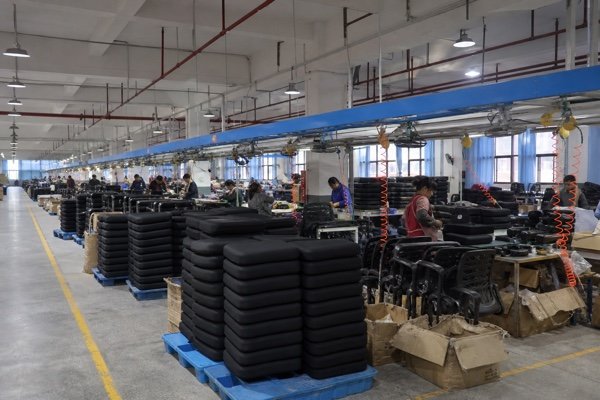
Follow the Entire Production Flow
I normally inspect these stages:
- Raw material and purchased-component storage
- Metal cutting, bending, welding, and coating
- Foam preparation and upholstery
- Plastic, base, mechanism, caster, and gas-lift supply
- Final chair assembly
- Function and appearance inspection
- Packing and finished-goods storage
- Container loading
Some factories produce frames and upholstery internally but purchase mechanisms, gas lifts, casters, and plastic parts. This is normal. The important question is whether approved suppliers can deliver enough components on time.
For example, an assembly line may handle 4,000 chairs per day, while the upholstery section can finish only 3,200 seats. In that case, practical capacity is closer to 3,200 chairs unless the factory has enough prepared inventory or extra upholstery support.
| Production Stage | Evidence I Check | Warning Sign |
|---|---|---|
| Metalwork | Machines, workers, daily records | Machines are present but inactive |
| Upholstery | Workstations and completed seats | Seat production trails assembly |
| Assembly | Line output and shift records | Only one model runs efficiently |
| Quality control | Inspection reports and rework area | Defects are packed without records |
| Packing | Carton supply and packed quantity | Output is counted before packing |
| Warehouse | Finished stock and order labels | Mixed or unidentified customer stock |
I also ask the factory to change from one model to another. A supplier offering many styles may lose several hours during tooling, fabric, carton, and work-instruction changes. Mixed-model orders therefore need a lower capacity estimate than one large order for a single chair.
Which Documents Can Support a Factory's Capacity Claim?
A staged factory tour can create a strong impression, but documents reveal whether the visible activity is normal and repeatable.
I compare production schedules, attendance, machine lists, quality records, purchase orders, packing records, and export documents for the same period.
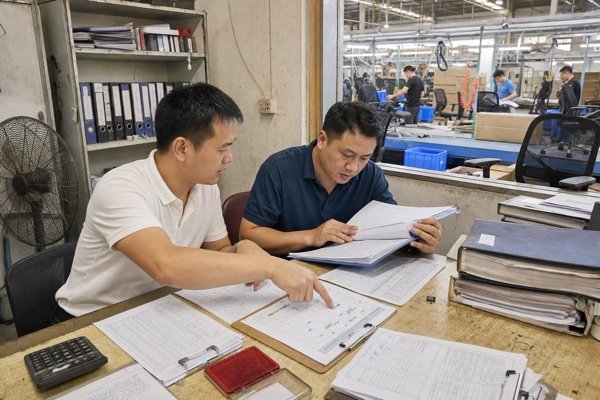
Cross-Check Physical Evidence with Records
I request a focused capacity file rather than hundreds of unrelated documents. The file should include:
- Production-line layout
- Main equipment list
- Daily output reports for recent weeks
- Worker attendance records
- Current production schedule
- Material purchase and receiving records
- Quality inspection and rework reports
- Finished-goods warehouse records
- Recent packing lists and shipment documents
- Major maintenance records
- List of outsourced processes
I check whether the numbers connect. If a factory reports 4,000 packed chairs per day but receives materials for only 50,000 chairs per month, I ask for an explanation. If daily production records show 3,500 chairs but packing lists show much less, I investigate rejection, inventory, and shipping timing.
Export experience also matters. A factory may produce enough chairs but still struggle with carton marks, mixed-model loading, export documents, or destination-specific requirements. I therefore review recent shipments to markets similar to mine. I remove customer-sensitive details when necessary.
I also review the quality system. ISO 9001 can support process control, but I still verify the certificate scope, issuing body, validity, and real factory practices.
How Do Product Type and Quality Requirements Change Capacity?
A single capacity number can be misleading because a simple task chair and a customized gaming chair require different labor and inspection times.
I calculate capacity by chair model, customization level, packaging method, and required tests instead of applying one factory-wide number to every order.
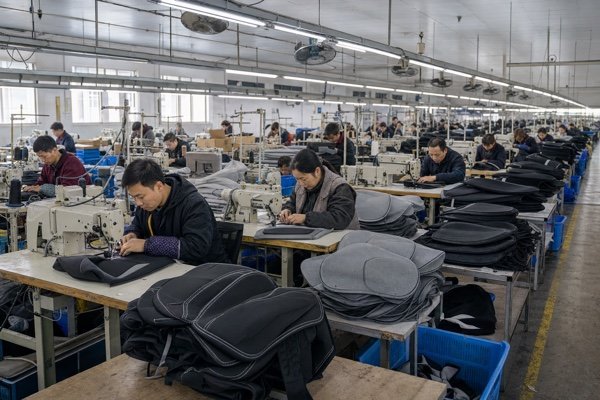
Adjust Capacity for the Actual Order
A basic mesh office chair may use standard black fabric, common components, and one-color cartons. A customized gaming chair may require multi-color upholstery, embroidery, molded foam, special accessories, and retail packaging.
These differences affect line speed:
| Order Condition | Likely Capacity Effect |
|---|---|
| One standard model and color | Highest output |
| Several colors of one model | Moderate changeover loss |
| Mixed models in one container | More sorting and packing time |
| Custom fabric or embroidery | Longer material preparation |
| Retail or e-commerce packaging | Slower packing and stricter inspection |
| New OEM/ODM design | Pilot production before mass production |
| Extra testing or inspection | More time before shipment |
I also check whether the relevant chair has been tested to the buyer's target standard. The BIFMA standards and guidelines are useful references for commercial office furniture performance in many markets.
I treat compliance claims carefully. Ordinary non-electrical office chairs do not automatically require CE marking. CE marking applies only when relevant European Union legislation covers the product. Likewise, RoHS becomes relevant when a chair contains covered electrical or electronic equipment, such as powered functions.
Certificates do not increase production capacity by themselves. However, missing tests, incorrect labels, or unapproved components can stop shipment and make the planned capacity meaningless.
What Capacity Risks Should Buyers Watch For?
A supplier may reach a target quantity by sacrificing quality, using unapproved subcontractors, or building inventory before materials are fully approved.
I review capacity risks together with quality control, subcontracting, component supply, peak-season demand, and corrective-action procedures.
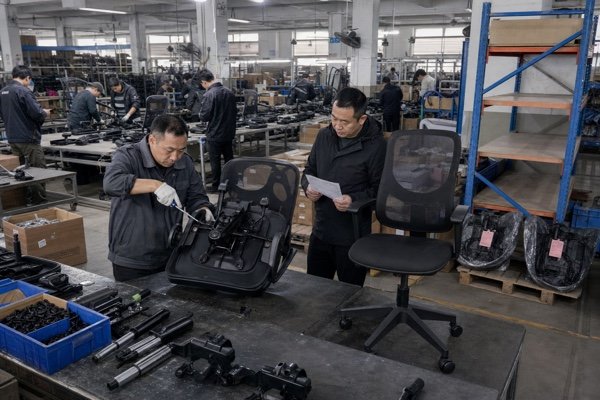
Connect Output with Quality and Delivery Control
I watch for several common warning signs:
| Risk | Possible Result | My Control Method |
|---|---|---|
| Capacity is based on overtime | Worker fatigue and unstable quality | Calculate normal-shift output first |
| Production is secretly outsourced | Material and workmanship changes | Approve subcontractors in writing |
| One component supplier is overloaded | Assembly stops | Check safety stock and backup sources |
| Output counts include rejected chairs | Usable capacity is overstated | Use packed, accepted quantity |
| Too many models run together | Frequent line changes | Build a model-based schedule |
| Peak season is ignored | Delivery slips | Check confirmed orders and free capacity |
| QC staff are reduced to raise output | Defects reach packing | Fix inspection points before production |
I ask who has authority to stop a line when defects repeat. I also check incoming inspection, first-article approval, in-line inspection, final inspection, and rework tracking.
After-sales attitude is another capacity signal. A responsible factory records complaints, identifies the affected production batch, and gives a corrective-action plan. A supplier that avoids discussing previous problems may also hide production delays or rework.
At OfficeFurnitureBulk, we support low-MOQ orders from 50 pieces, mixed-model container loading, and OEM/ODM requirements. We still schedule each order according to its materials, model mix, quality requirements, and available line time. This approach is more reliable than applying the same lead time to every chair.
What Should I Request Before Confirming an Order?
A quotation can look complete while leaving out the production assumptions that control price, quality, and delivery.
I request model-specific output, available line time, material lead time, quality requirements, and a written production schedule before paying a deposit.
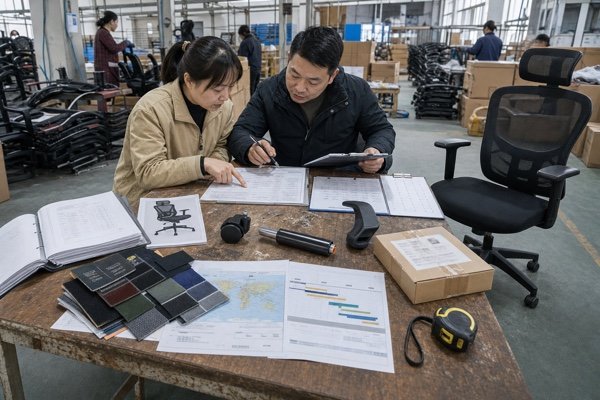
Use a Capacity-Focused Inquiry Checklist
My inquiry normally includes:
- Chair model or product drawing
- Order quantity by model and color
- Required materials and components
- Logo and packaging requirements
- Target standards or test reports
- Destination market
- Required delivery date
- Sample approval date
- Daily output for the requested model
- Number of lines assigned to the order
- Current available monthly capacity
- Material preparation time
- Planned production start and finish dates
- Inspection and loading dates
- List of outsourced processes
- Delay-response and after-sales procedure
I ask the supplier to show the production calculation behind its delivery promise. For example, an order of 20,000 chairs should not be described only as a “25-day order.” The factory should separate material preparation, pilot production, mass production, final inspection, packing, and loading.
I also request milestones in the purchase agreement. The supplier can provide material photos, first-unit approval, weekly output updates, inspection reports, and container-loading records. These checkpoints make problems visible before the final shipping date.
Request Capacity Report
Please send us your chair models, quantities, destination market, customization requirements, and target delivery date. We will return a model-based capacity calculation, proposed production schedule, and OEM/ODM quotation.
FAQ
What is a normal monthly production capacity for an office chair factory?
It depends on the factory size, chair model, automation, shifts, and outsourcing. I verify the calculation behind the number instead of relying on an industry average.
Is one day of factory output enough to verify capacity?
One normal production day gives me a useful starting point. I then compare it with several weeks of output, packing, quality, warehouse, and shipment records.
Should I count assembled chairs or packed chairs?
I prefer accepted and packed chairs. Components, unfinished chairs, and rejected units should not be counted as finished production capacity.
How do I calculate available capacity?
I subtract capacity already committed to confirmed orders from practical monthly capacity. I also allow time for maintenance, model changes, and unexpected delays.
Can a factory produce 100,000 office chairs per month?
Yes, if its daily packed output, active lines, working days, component supply, and utilization rate support that figure. I still verify available capacity for my order.
Does a low MOQ mean the factory has low capacity?
No. A factory can offer a low MOQ while operating several production lines. I check whether small orders have a clear schedule and receive the same quality control.
What should a capacity report include?
It should include model-specific daily output, active lines, working days, utilization assumptions, current order load, material lead time, production milestones, quality controls, and loading dates.
Conclusion
I trust a capacity claim only when daily output, active lines, working days, quality records, and available production time support the same result.