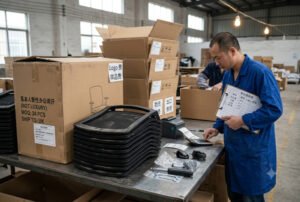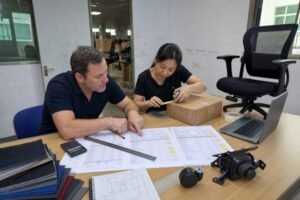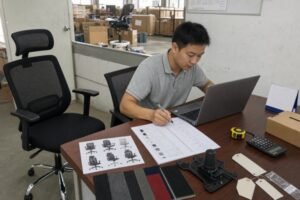
A Practical Remote Verification Guide for International Office Chair Buyers
Remote sourcing saves travel time, but staged videos and incomplete records can hide weak capacity, subcontracting, and poor quality control.
I audit an office chair factory remotely through a live guided video tour, company identity checks, production records, certification verification, social media research, quality documents, capacity calculations, and recent shipment evidence. I cross-check every important claim instead of trusting one source.
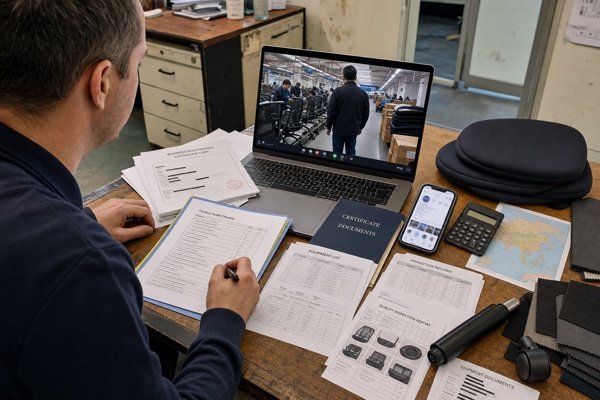
A remote factory audit works when I control what the supplier shows and compare the visit with independent evidence.
What Should I Verify Before the Video Call?
A video call without preparation can become a sales presentation that shows attractive areas but avoids production risks.
Before the call, I confirm the legal company name, factory address, product scope, required chair model, target quantity, delivery date, and the evidence that the supplier must show.
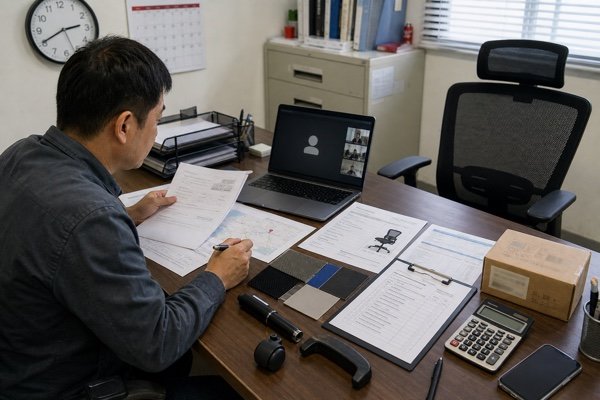
Prepare a Product-Specific Audit Plan
I begin with the exact chair that I plan to purchase. A factory may be capable of producing a basic task chair but lack the equipment, workers, or component suppliers required for a more complex ergonomic chair.
I send the supplier a short agenda before the remote factory audit. I also keep several unannounced checks for the live call. My audit request normally covers:
- Legal company name and registered factory address
- Factory ownership or lease information
- Main office chair product categories
- In-house and outsourced production processes
- Number of employees and production shifts
- Main equipment and active production lines
- Monthly output by chair category
- Current order backlog
- Quality inspection procedures
- Product test reports and management certificates
- Export markets and recent shipment evidence
- After-sales and defect-handling procedures
I ask the supplier to prepare documents but not a heavily edited factory video. I prefer a stable live connection and a staff member who can walk through the entire facility.
| Information | Why I Check It | Evidence I Request |
|---|---|---|
| Legal company name | Confirms the contracting party | Business registration |
| Factory address | Confirms the production location | Registration, map, live entrance |
| Product scope | Shows relevant experience | Current production and records |
| Target quantity | Tests order suitability | Model-specific capacity plan |
| Delivery date | Tests available capacity | Backlog and production schedule |
| Outsourcing | Reveals supply-chain risk | Approved subcontractor list |
How Should I Conduct the Live Factory Tour?
A prepared recording can hide idle equipment or borrowed facilities, so I request one continuous and interactive video call.
I control the live tour route and ask the supplier to show the entrance, company identity, workshops, workers, active machines, warehouses, quality area, production boards, packing area, and loading point without edited breaks.
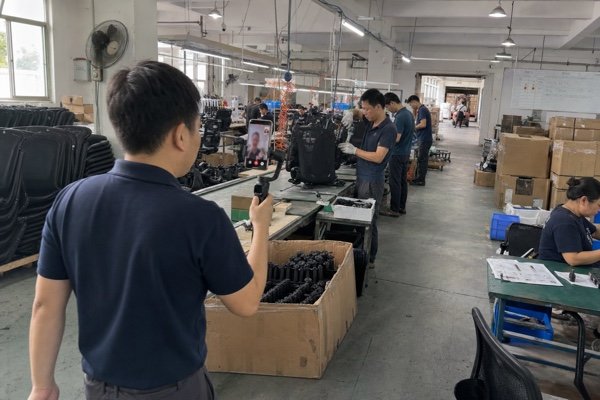
Control the Route and Ask Unplanned Questions
I ask the camera operator to begin outside the factory. I check the company sign, surrounding buildings, entrance, and reception area. I then ask the operator to walk directly into the workshop.
During the tour, I may request a close view of a production order, machine plate, material label, inspection record, or random carton. I may also ask a worker to demonstrate an assembly or quality test. These requests help me confirm that the call is live and that the facility is operating normally.
My preferred route is:
- Factory entrance and company sign
- Raw-material and component warehouse
- Metal, foam, upholstery, injection, or other in-house workshops
- Office chair assembly lines
- In-process quality inspection points
- Product testing and final inspection area
- Packing and finished-goods warehouse
- Maintenance area
- Loading dock or container-loading area
I watch for continuity. If the call stops before moving to another building, I ask why. A separate building may be normal, but I want to understand whether it belongs to the same company.
| Live Checkpoint | What It Can Confirm | Warning Sign |
|---|---|---|
| Entrance | Factory identity and location | Supplier refuses to start outside |
| Active line | Current production activity | Only empty machines are shown |
| Workers | Staffing and process knowledge | Workers appear only in one staged area |
| Warehouse | Material and stock control | Unmarked or unrelated products |
| QC area | Inspection capability | No tools, standards, or records |
| Loading area | Shipment activity | No finished goods or loading access |
How Can I Verify the Supplier Online?
A professional website supports credibility, but a website can be created without owning a factory.
I compare the official website, LinkedIn, Facebook, employee profiles, online maps, business records, contact details, company history, and factory images to identify contradictions in ownership, location, age, and products.
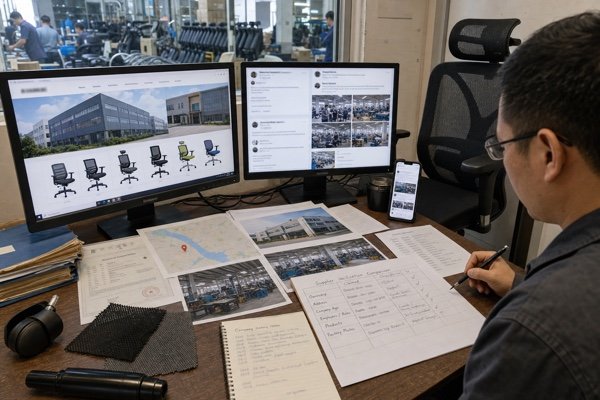
Build a Consistent Digital History
Most established medium-sized and large manufacturers have an official website. I check whether the website shows a consistent company name, address, telephone number, email domain, product range, and factory history.
I do not treat a good website as proof. I compare it with commercial social platforms. LinkedIn can show whether the company has employees in engineering, purchasing, quality, production, and export roles. If almost every visible employee works in sales, I investigate whether the supplier is mainly a trading company.
Facebook and other business social media may show older factory activity, trade fairs, new equipment, product development, container loading, or staff events. Older posts help me build a timeline. A company claiming 15 years of manufacturing experience but showing no history beyond the previous year requires further investigation.
I also compare factory photos across channels. I look at floor colors, columns, production lines, windows, uniforms, signs, and surrounding buildings. I use online maps and reverse-image searches when a photo appears generic or reused.
| Online Source | What I Compare | Possible Contradiction |
|---|---|---|
| Official website | Address, products, history | New domain with a long-history claim |
| Employee count and roles | Sales staff without technical roles | |
| Historical factory activity | Only catalog images | |
| Online maps | Building and location | Address points to an office |
| Business registration | Legal identity and scope | Contract uses another company |
| Email domain | Company identity | Only free personal email accounts |
Which Audit Documents Should I Request?
A live tour shows the factory today, but documents reveal whether it can repeat the same performance over several months.
I request business records, equipment lists, production reports, attendance summaries, maintenance logs, quality records, certificates, test reports, order schedules, and shipment evidence covering at least three recent months.
Cross-Check Dates, Quantities, and Addresses
I do not review each document separately. I compare dates and quantities across different records.
For example, if a supplier claims to produce 80,000 chairs per month, I compare that claim with worker attendance, packing records, quality reports, material purchases, production schedules, and shipment documents. The numbers do not need to match perfectly, but they should make commercial sense.
My document list normally includes:
- Business registration
- Factory organization chart
- Employee count by department
- Main equipment list
- Preventive maintenance records
- Monthly production output
- Current order backlog
- Incoming material inspection records
- In-process and final inspection reports
- Defect and rework records
- Product test reports
- Management system certificates
- Redacted bills of lading or export documents
- Customer complaint and corrective-action records
- Main component supplier list
I treat ISO 9001 as evidence of a quality management framework, not proof of capacity or product performance. I check the certificate scope, factory address, issuing body, and validity.
For chair performance claims, I request reports related to applicable BIFMA standards. I confirm that the tested model, materials, base, gas lift, armrests, and mechanisms match the product I want to buy.
I also review regulatory claims carefully. CE marking applies only to products covered by relevant EU legislation. A standard non-electrical chair should not carry an unsupported CE claim. If a chair includes electrical components, I may also review whether the RoHS Directive is relevant.
How Can I Verify Production Capacity Remotely?
A large workshop does not guarantee that my order can be produced and shipped within the promised lead time.
I verify capacity through model-specific hourly output, bottleneck processes, shifts, working days, utilization, rejection rates, material lead times, current backlog, and the available production slot for my order.
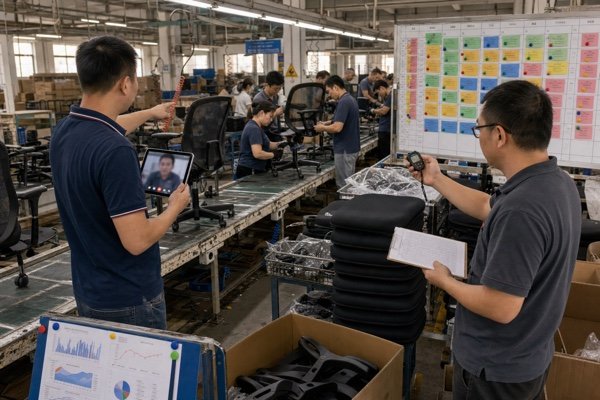
Calculate Practical Capacity
I ask which process limits the output. The bottleneck may be upholstery, welding, painting, foam production, assembly, inspection, or packing.
I use this basic calculation:
Practical monthly capacity = bottleneck hourly output × working hours × shifts × working days × utilization rate
If a packing line handles 250 chairs per hour, works eight hours per day for 26 days, and operates at 85% utilization, its practical monthly capacity is about 44,200 chairs.
I also check the product mix. A basic mesh task chair may move through the line faster than a gaming chair with molded foam, embroidery, custom armrests, and special packaging.
OfficeFurnitureBulk reports monthly capacity of around 100,000 office and gaming chairs. When discussing a real inquiry, I still connect that figure to the selected model, customization, component availability, current backlog, and shipping deadline. The same approach should apply to every supplier.
| Capacity Factor | Evidence I Request | Common Risk |
|---|---|---|
| Hourly output | Live timed production | Unsupported estimate |
| Working shifts | Attendance and shift records | Dependence on overtime |
| Utilization | Downtime and maintenance data | Calculation at 100% |
| Rejection rate | QC and rework reports | Defects excluded |
| Material supply | Purchase plan and lead times | Missing critical components |
| Backlog | Current production schedule | No available order slot |
How Do I Evaluate Quality Control and After-Sales Support?
A supplier may pass a factory tour but still create losses if inspections are weak or complaints are ignored.
I audit incoming materials, in-process checks, final inspection, product testing, traceability, defect handling, spare-parts support, response times, and corrective-action procedures for the exact chair model.
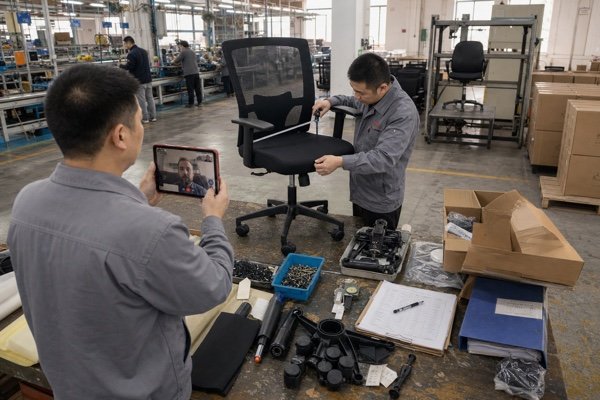
Ask the Factory to Demonstrate Real Checks
I ask the quality inspector to demonstrate several checks during the video call. Depending on the product, these may include chair dimensions, appearance, stitching, mechanism operation, gas-lift function, caster movement, stability, packaging, and carton markings.
I also request recent inspection reports with customer information removed. I compare the reports with the actual tools and inspection stations shown during the call.
After-sales attitude is also part of my chair supplier audit. I ask what happens if customers report loose armrests, damaged cartons, incorrect colors, missing hardware, or repeated component failures.
A responsible factory should explain:
- Who receives a complaint
- How quickly the team responds
- Which evidence the buyer must provide
- How the factory investigates the root cause
- Whether replacement parts are available
- How corrective actions are recorded
- How repeat defects are prevented
- Who pays when the factory is responsible
I prefer to agree on spare parts, claim deadlines, and responsibility before mass production. A low quotation does not compensate for poor support after the goods arrive.
What Should I Include in the Audit Request?
A vague request produces vague evidence, so I send a structured checklist linked to the chair and delivery target.
My request states the model, quantity, customization, destination market, delivery date, required documents, video-tour route, quality standard, capacity evidence, and rules for subcontracting.
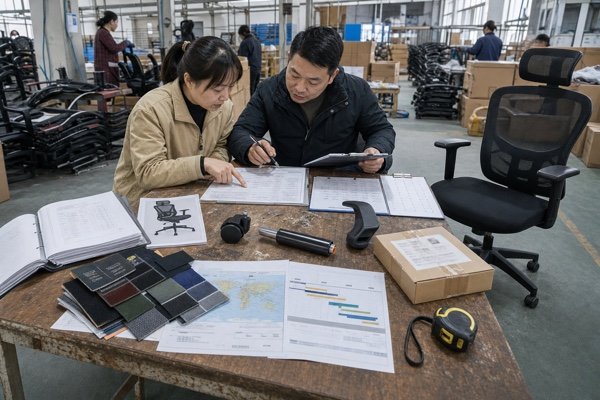
Request Relevant Evidence
I include these questions in my inquiry:
- What is your legal company name and factory address?
- Which processes are completed in-house?
- Which components or processes are subcontracted?
- Can you provide a live, continuous factory tour?
- What is the practical monthly output for this chair model?
- What is your current confirmed backlog?
- When is the next available production slot?
- Which materials have the longest lead times?
- What quality checks will apply to my order?
- Which certificates and test reports match this model?
- Can I review recent production and QC records?
- Can you provide redacted shipment evidence?
- How do you handle defects and replacement parts?
- Can you support custom fabric, color, logo, and packaging?
- Can different chair models be loaded in one container?
I request written answers before comparing quotations. Clear evidence makes it easier to separate a suitable manufacturer from a supplier that only presents attractive products.
Request Office Chair Factory Audit Documents
Please provide your target chair model, expected quantity, customization requirements, destination market, and required delivery date. We can prepare a live factory video tour, relevant certificates, production-line information, quality documents, and an OEM/ODM quotation.
FAQ
Can I audit an office chair factory without visiting China?
Yes. I combine a live interactive video tour with legal records, production documents, social media research, quality reports, capacity calculations, and shipment evidence.
How long should a remote factory audit take?
I normally allow 60 to 90 minutes for a focused factory. A larger facility or complex product may require a second call and additional document review.
Is a prerecorded factory video enough?
No. A prerecorded video can be edited, outdated, or filmed in another facility. I use it only as supporting material and still request a live tour.
How can I tell whether the supplier owns the factory?
I compare the business registration, factory address, live entrance, employee information, equipment records, online maps, contracts, and payment beneficiary.
Which certificates should I check?
I check certificates relevant to the factory, product, and destination market. I verify the scope, model, address, issuing body, report number, and validity.
Should I accept subcontracted production?
I may accept disclosed and controlled subcontracting. I ask which processes are outsourced, who performs them, how quality is controlled, and whether changes require approval.
What is the biggest warning sign in a remote audit?
I become cautious when a supplier refuses a continuous live tour or cannot connect its capacity, quality, and factory claims with current records.
Conclusion
I trust a remote factory audit only when live evidence, company records, online history, production data, quality controls, and shipment information support the same conclusion.