Struggling to budget for office chair imports? Unpredictable shipping costs are making financial planning a nightmare, creating huge risks for your business. Let's break down the real cost drivers.
Freight uncertainty in 2026 means volatile shipping rates, but the bigger issues are tariffs and delays. For bulky items like office chairs, these factors heavily impact your total landed cost. Focusing only on freight rates is a costly mistake; you must prioritize total cost visibility.
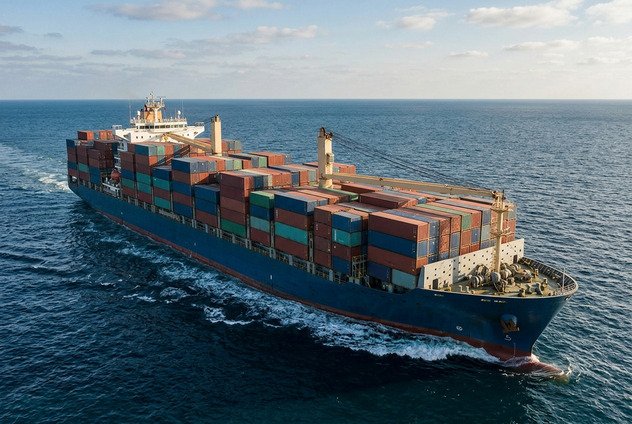
I remember the chaos of the pandemic shipping crisis. We all held our breath as prices skyrocketed. Now, things feel different, but not necessarily better. The uncertainty has changed shape. It's no longer about just one massive problem but a dozen smaller, unpredictable ones. For anyone importing large products like office chairs, navigating this new landscape is critical. Let's dig into what this means for your bottom line in 2026.
Why Are Low Freight Rates Still a Huge Risk?
You see a cheap shipping quote and think you've won. But hidden spikes and sudden volatility can completely destroy your budget. You need to understand what drives these changes.
Even with low base rates, factors like carrier overcapacity, geopolitical events, fuel surcharges, and seasonal demand can cause sharp, sudden price hikes. For bulky office chairs, these spikes disproportionately inflate your total import costs, creating major financial uncertainty for your business.

I've learned the hard way that a low spot price isn't a guarantee. The shipping market in 2026 is a different beast than it was at the peak of the pandemic. While rates have fallen, they haven't stabilized. They’ve become incredibly volatile. We're dealing with a perfect storm of factors that can cause rates to jump overnight.
Key Drivers of Volatility
| Factor | Impact on Office Chair Imports |
|---|---|
| Carrier Overcapacity | Shipping lines cancel sailings (blank sailings) to prop up rates1, causing sudden price increases and delays. |
| Geopolitical Events | Crises like the Red Sea situation force long detours, adding weeks to transit time and massive surcharges.2 |
| Fuel Surcharges | Bunker Adjustment Factors (BAFs) change with oil prices3, adding an unpredictable cost layer. |
| Seasonal Demand | Peak seasons before major holidays can lead to space shortages and premium rates, even if you planned ahead. |
For office chairs, which are big and not very dense, freight is a huge part of the cost. A small percentage increase in shipping can have a much larger impact than it would on smaller, high-value electronics. This makes your business extremely vulnerable to these short-term spikes.
Are Tariffs a Bigger Threat Than Shipping Costs?
You found an amazing shipping deal for your chairs. But what if import tariffs completely wipe out those savings, or even cost you more? You must factor in duties from day one.
Yes, tariffs are often a much bigger threat. A small saving on freight is frequently insignificant compared to tariffs, which can be 10-50% or more. Unpredictable policy changes have a far greater impact on your final landed cost than most freight fluctuations do.

A few years ago, a client was so focused on shaving a few hundred dollars off a container's freight cost that they overlooked a looming tariff adjustment. The new duty ended up costing them thousands more per container, completely erasing their "savings." This is why we must shift our focus from just the freight cost to the Total Landed Cost. This is the only number that matters. It includes the product cost, shipping, insurance, customs duties, and all other fees.
Landed Cost vs. Freight Cost4
The difference is stark, especially for office chairs imported from China to the US or EU.
| Cost Component | Impact on Final Price | Predictability |
|---|---|---|
| Freight Cost | Significant, but often 10-20% of landed cost. | Low (highly volatile) |
| Tariffs & Duties | Can be 10-50%+ of the product's value. | Low (subject to political changes) |
A 5% drop in freight rates might save you a little, but a 25% tariff will destroy your profit margin. Trade policies can change with little warning5, forcing importers to either rush orders to beat a deadline—driving up freight rates for everyone—or delay them, causing stock shortages. Focusing only on the shipping quote is like trying to drive while only looking at your feet.
How Do Shipping Delays Create Hidden Costs?
You think the biggest problem with a delay is an unhappy customer. But the financial damage from unstable shipping times goes much deeper, quietly draining your resources.
Unstable transit times from rerouting, port congestion, and delays inflate your hidden costs. They force you to hold more inventory, increase your safety stock, and risk lost sales from stockouts. This is especially damaging for large products like office chairs.
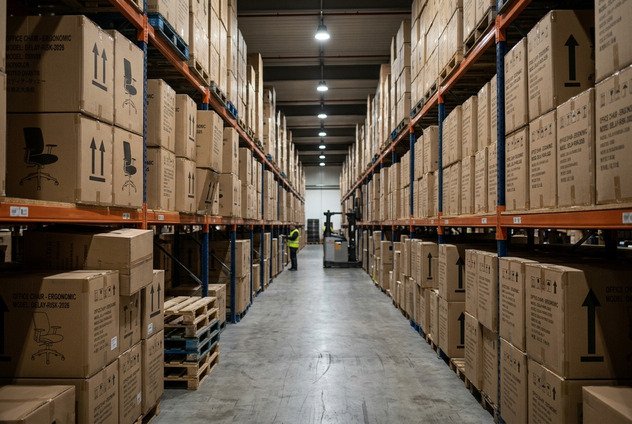
When a container of office chairs is stuck at sea for an extra three weeks, it's not just sitting there. That's capital—your money—tied up in a metal box, doing nothing. I’ve seen businesses struggle because their cash flow was paralyzed by inventory stuck in transit. The problem is that these costs aren't on any invoice. They are silent killers.
The True Cost of a Delay
Let's break down these hidden expenses:
- Inventory Holding Costs: Every day your chairs are in a warehouse or on a ship, they cost you money in storage, insurance, and tied-up capital. A longer transit time directly increases this cost.
- Increased Safety Stock: If you can't predict when your shipment will arrive, you're forced to order and hold more "just-in-case" inventory. This safety stock ties up even more cash and warehouse space.
- Risk of Stockouts: If a delay is unexpectedly long, you might run out of chairs to sell. The cost here isn't just the lost profit from that one sale; it's the potential loss of a customer who goes to a competitor and never comes back.
For office chairs—which take up a lot of space but have a lower value per cubic meter—these hidden costs add up fast. A reliable schedule is often more valuable than the cheapest freight rate.
Conclusion
In 2026, managing office chair import costs means looking beyond cheap freight. Focus on total landed cost, build supply chain resilience, and partner with a manufacturer who understands these challenges.
"[PDF] Fact Finding Investigation 29 Final Report", https://www.fmc.gov/wp-content/uploads/2022/06/FactFinding29FinalReport.pdf. A maritime regulator or research source should explain that carriers use blank sailings to manage vessel capacity when demand is weak, which can reduce available space and affect rates or schedules. Evidence role: mechanism; source type: government. Supports: Blank sailings are used by shipping lines as a capacity-management tool that can affect freight availability and rates.. Scope note: The source may describe capacity management without proving intent to 'prop up' prices in every instance. ↩
"The Red Sea shipping crisis and its global repercussions", https://blogs.worldbank.org/en/developmenttalk/navigating-troubled-waters--the-red-sea-shipping-crisis-and-its-. An international maritime or trade source should document that Red Sea security disruptions caused vessels to reroute around southern Africa, increasing voyage distance, transit time, and shipping costs. Evidence role: case_reference; source type: institution. Supports: Red Sea disruptions have forced container vessels onto longer routes and increased transit times and costs.. Scope note: The magnitude of added time and surcharges varies by route, carrier, and contract terms. ↩
"Fuel Dashboard | Open Ag Transport Data", https://agtransport.usda.gov/stories/s/Fuel-Dashboard/tzmp-vzg4/. A maritime fuel or logistics source should define bunker adjustment factors as fuel-related surcharges that vary with bunker-fuel or oil-price movements. Evidence role: definition; source type: institution. Supports: Bunker Adjustment Factors are fuel-related surcharges that change with fuel or oil-price movements.. Scope note: Specific BAF formulas differ by carrier, trade lane, and contract. ↩
"[PDF] The impact of container shipping costs on import and consumer prices", https://www.oecd.org/content/dam/oecd/en/publications/reports/2025/08/the-impact-of-container-shipping-costs-on-import-and-consumer-prices_dfc467b3/957f0c0c-en.pdf. A logistics-cost study or trade-cost dataset should provide context on the relative contribution of international freight to landed costs for containerized goods, especially bulky or lower-value-density products. Evidence role: statistic; source type: research. Supports: Freight can represent a material share of landed cost for imported office chairs or similar bulky goods.. Scope note: A general freight-share estimate may not match a specific office-chair shipment because product value, container loading, route, and contract terms vary. ↩
"U.S. Trade Policy Uncertainty and the Current Account", https://www.imf.org/en/publications/wp/issues/2026/01/30/u-s-573596. A trade-policy uncertainty source should document that tariff announcements, trade remedies, and policy revisions can create uncertainty for importers and affect trade timing and costs. Evidence role: general_support; source type: institution. Supports: Trade-policy changes can create material uncertainty for importers.. Scope note: The source may establish policy uncertainty broadly rather than demonstrate that every tariff change occurs with little warning. ↩