
Are you an office furniture buyer importing into the EU? New packaging regulations are coming, and they could significantly impact your supply chain and costs.
From August 12, 2026, the EU's PPWR1 (EU 2025/40) mandates sustainable, recyclable packaging for all products, including office furniture. Importers face primary responsibility for compliance, requiring verified supplier adherence and meticulous documentation to avoid fines and market exclusion.
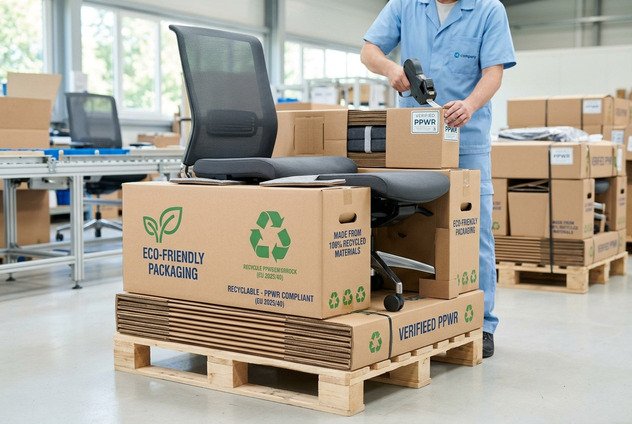
Understanding these changes now is crucial for navigating the evolving landscape of international trade. Let's dive into the specifics of what the PPWR entails and how you can proactively ensure a smooth transition for your business.
What is PPWR and When Does it Apply?
Are you aware of the new EU Packaging and Packaging Waste Regulation? This critical legislation is set to redefine packaging standards across the European Union.
The PPWR (EU 2025/40) becomes fully applicable on August 12, 2026, requiring all packaging placed on the EU market, including items like office chair cartons, foam, and plastic films, to meet new sustainability criteria.
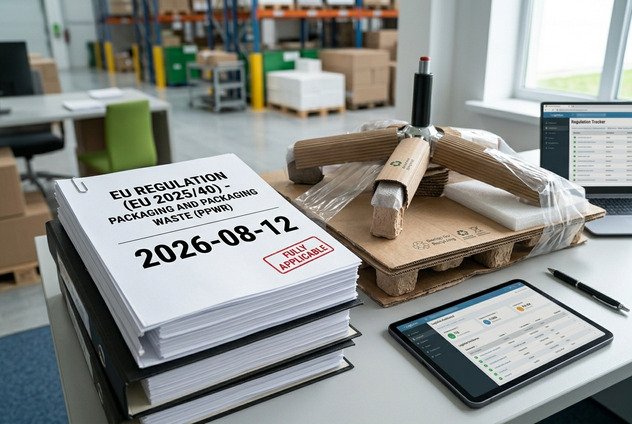
I understand that the August 2026 deadline seems distant, but preparing for the PPWR is an immediate concern for any importer. This regulation, formally known as Regulation (EU) 2025/402, replaces the older Packaging Directive (94/62/EC)3 and applies directly across all EU member states without needing national transposition. This means a unified set of rules for everyone, simplifying compliance in some ways but also demanding strict adherence. The core principle is to reduce packaging waste and promote a circular economy. This involves not just recycling, but also minimizing packaging and ensuring its reusability where possible. For instance, the regulation sets targets for reducing packaging waste per capita, aiming for a 5% reduction by 2030, 10% by 2035, and 15% by 2040. These ambitious goals mean that every piece of packaging, from the smallest accessory to the largest office desk carton, will be scrutinized. As an importer, I must ensure that my suppliers are fully aware of these dates and the implications for their packaging designs. The regulation also introduces specific restrictions on certain substances in packaging, such as heavy metals and PFAS in food-contact packaging4, though these might be less relevant for typical office furniture. However, the overarching message is clear: sustainable packaging is no longer optional; it is a legal requirement. My team and I are already working to understand how these specific requirements translate to the diverse range of office furniture we handle, from ergonomic chairs to modular workstations. We are focusing on how to communicate these complex requirements to our manufacturing partners effectively.
What are the New Packaging Design Requirements?
Are you still using traditional packaging materials for your office furniture imports? The EU's new rules demand a fundamental shift in packaging design.
Packaging must be minimized in weight and volume to only what is necessary for its function, and by 2030, all packaging must be recyclable (Design for Recycling), prohibiting excessive packaging and hard-to-recycle materials like certain EPS foams5.
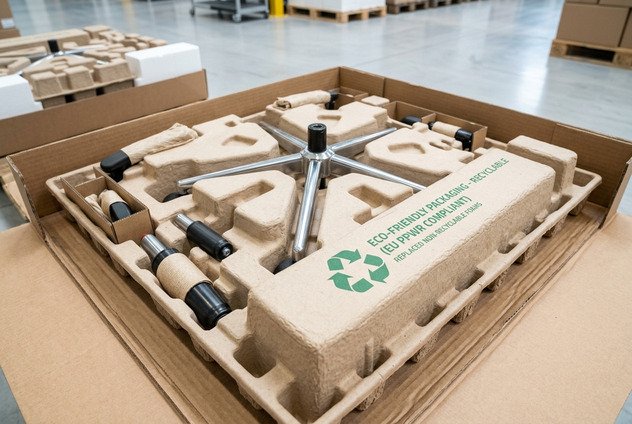
When we talk about “minimize + recyclable” for office furniture, I am looking at a significant overhaul of our current packaging strategies. This isn't just about reducing the amount of cardboard; it's about a holistic approach to packaging design. For large items like office chairs and desks, the challenge is particularly acute. We often rely on robust packaging to prevent damage during transit, which historically has meant more material, including various types of foam and plastic films. However, the PPWR explicitly targets over-packaging and the use of difficult-to-recycle materials. This means that certain types of expanded polystyrene (EPS) foam6, which are common in our industry, might be phased out or require significant innovation to become recyclable. By 2030, the regulation states that all packaging must be recyclable by design. This isn't just a suggestion; it's a legal mandate. My team and I are actively engaging with our Chinese suppliers to explore alternative materials such as molded pulp, recycled cardboard, or innovative air-cushioning systems that are both protective and easily recyclable. We are also evaluating the structural design of packaging to ensure it uses the absolute minimum material while still guaranteeing product integrity. This could involve redesigning internal supports, optimizing box dimensions to reduce void space, and exploring reusable packaging solutions for internal logistics. The goal is to achieve a balance between protection, cost-effectiveness, and environmental compliance. This shift will require close collaboration with our manufacturing partners to implement new designs and validate their effectiveness. It's a complex process, but one that is essential for continued access to the EU market.
What are the Importer’s Responsibilities and Labeling Requirements?
Are you clear on your role as an importer under the new EU packaging regulations? The burden of compliance largely falls on your shoulders.
Importers must register for EPR (Extended Producer Responsibility) in the EU7, covering packaging recycling costs. Packaging also requires clear labeling with manufacturer and importer names and addresses, with future plans for standardized recycling labels to aid sorting.
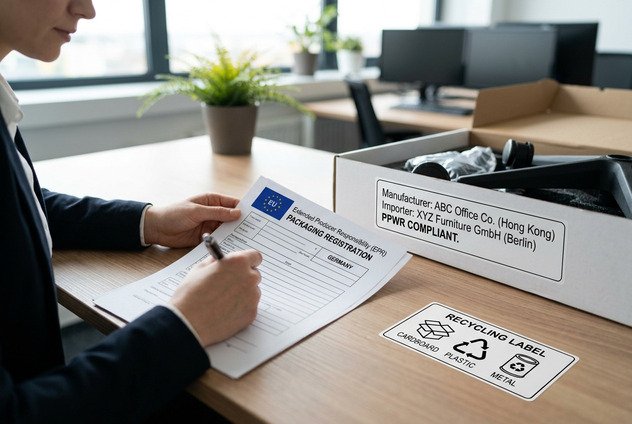
As an importer, I have to admit, the new EPR responsibilities are a significant shift. Previously, the focus might have been more on the manufacturer, but under PPWR, I am directly accountable. This means I need to register with the relevant EPR schemes in each EU member state where my products are sold. This isn't a one-time task; it involves ongoing reporting and payment of fees based on the quantity and type of packaging I place on the market. These fees contribute to the collection, sorting, and recycling of packaging waste. It's a direct financial responsibility that will impact our landed costs. Beyond the financial aspect, the labeling requirements are equally stringent. Every piece of packaging must clearly display the name and address of both the manufacturer and the importer. This ensures traceability and accountability throughout the supply chain. While the specific pictograms for material composition are still being finalized by the Commission, I anticipate a need for clear, standardized labeling that indicates the recyclability of each packaging component. This will not only help consumers with proper sorting but also streamline the recycling process. My team is already researching the various EPR schemes across the EU and preparing for the registration process. We are also working on updating our packaging specifications to include the mandatory labeling information. This proactive approach is vital to avoid any disruptions to our shipments and to ensure we are fully compliant by the deadline. I believe that clear communication with our logistics partners and customs brokers will be key to successfully implementing these new requirements.
What Compliance Documents are Essential?
Are you prepared for the paperwork avalanche that comes with the new EU packaging rules? Without the right documents, your shipments could be stalled.
Each shipment requires an EU Declaration of Conformity (DoC) and comprehensive technical documentation. Non-compliant packaging will be denied customs clearance, potentially leading to significant fines and market exclusion for importers.
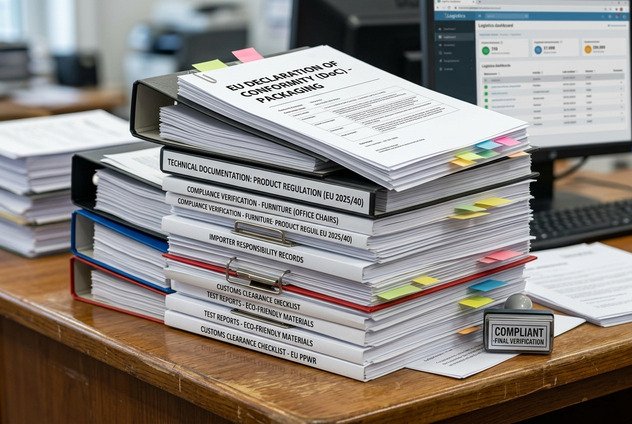
I cannot stress enough the importance of meticulous documentation under the PPWR. This is where the rubber meets the road, so to speak. For every batch of office furniture we import, we will need to have an EU Declaration of Conformity (DoC)8 readily available. This document is a formal statement from the manufacturer, or in some cases, the importer, declaring that the packaging meets all the essential requirements of the PPWR. It's not just a piece of paper; it's a legal declaration. Alongside the DoC, comprehensive technical documentation is equally crucial. This includes detailed information about the packaging materials used, their composition, recyclability assessments, and any other relevant data demonstrating compliance with the regulation's design and sustainability criteria. This technical file acts as the evidence supporting the DoC. Without these documents, our shipments risk being held up at customs, incurring demurrage charges, and potentially facing re-export or destruction. The financial implications of non-compliance are severe, ranging from substantial fines to a complete ban from the EU market. My team is working closely with our suppliers to ensure they understand the exact requirements for these documents and can provide them accurately and promptly. We are also establishing internal protocols for reviewing and archiving this documentation to ensure easy access during audits or inspections. This proactive management of compliance documents is a cornerstone of our strategy to mitigate risks and ensure uninterrupted market access.
What are the Key Purchasing Recommendations?
Are you ready to adapt your purchasing strategies to meet the new EU packaging demands? Proactive changes now can save you significant costs and headaches later.
Immediately require Chinese suppliers to optimize packaging design (reduce materials, use recyclable materials, provide DoC), evaluate total landed costs (shipping + recycling + inventory), and collaborate with compliant partners. Early preparation significantly reduces risks and extra expenses post-2026.

My purchasing strategy is undergoing a significant transformation in light of the PPWR. The most immediate action I am taking is to engage directly with our Chinese suppliers. I am emphasizing the urgent need for them to redesign their packaging to align with the new EU requirements. This means pushing for material reduction, exploring mono-material solutions for easier recycling, and ensuring they can provide the necessary EU Declaration of Conformity (DoC) and technical documentation for every product. This isn't a request; it's a mandatory requirement for our continued partnership. Furthermore, I am re-evaluating our total landed costs. This now includes not only the traditional shipping and customs fees but also the newly introduced EPR recycling fees. Understanding these additional costs upfront allows us to adjust our pricing strategies and avoid unexpected expenses. We are also looking at optimizing inventory management to minimize the impact of any potential customs delays due to non-compliant packaging. Collaborating with partners who are already well-versed in EU environmental regulations is also a priority. This includes logistics providers, customs brokers, and even third-party compliance consultants who can offer expertise and support. My goal is to build a resilient supply chain that is fully prepared for the 2026 deadline and beyond. By taking these steps now, I am confident that we can navigate the complexities of the PPWR, minimize our risks, and continue to serve our EU customers without interruption.
Conclusion
The EU PPWR significantly impacts office furniture importers, mandating sustainable, recyclable packaging and stringent compliance. Proactive engagement with suppliers, cost re-evaluation, and robust documentation are essential for seamless market access post-2026.
About Office Furniture Bulk
Office Furniture Bulk: Office Chair and Gaming Chair OEM/ODM Manufacturer
Positioning:
Office chair and gaming chair OEM/ODM manufacturer (8+ years of experience, China).
Advantages:
- High cost-effectiveness, helping clients enhance market competitiveness.
- Diverse styles, regularly launching new products to keep up with market trends.
- International standard certifications (CE, RoHS, BIFMA), ensuring quality.
- Meeting high container loading requirements for brands and e-commerce clients.
- Strong production capacity, with a monthly output of 100,000 chairs.
- Low MOQ, starting from 50 chairs, suitable for small to large clients.
- Flexible delivery times, quickly responding to order demands.
Target Customers:
European, South American brands, wholesalers, retailers, also supporting Asian markets, primarily targeting mid-to-low-end market clients.
Customer Profile:
- Purchasing Managers / Brand Managers / Business Owners / Category Managers
- Furniture brands and retail chains
- Small and medium-sized enterprises (annual procurement > $20,000)
Customer Needs:
- Customized solutions (custom styles, fabrics, materials, packaging)
- Flexible delivery, quick response
- Mixed container loading for optimized shipping costs
- Stable and efficient supply chain guarantee
Customer Value:
- Reduced procurement risks, reliable delivery
- Rich manufacturing and export experience
- Continuous launch of new designs, helping clients quickly capture market share
- Compliance certifications, assisting brands in market expansion
"(EU) 2025/40 - EUR-Lex", https://eur-lex.europa.eu/legal-content/EN/TXT/?uri=CELEX:32025R0040&qid=1737533347186. Regulation (EU) 2025/40 establishes EU-wide rules on packaging and packaging waste, including applicability dates, sustainability and recyclability requirements, and obligations for economic operators placing packaging on the EU market. Evidence role: general_support; source type: government. Supports: From August 12, 2026, the EU's PPWR (EU 2025/40) mandates sustainable, recyclable packaging for all products, including office furniture. Importers face primary responsibility for compliance, requiring verified supplier adherence and meticulous documentation to avoid fines and market exclusion.. Scope note: The source supports the general PPWR obligations for packaging; application to office furniture follows from the regulation’s broad coverage of packaging placed on the EU market rather than from furniture-specific provisions. ↩
"Factsheet - 32025R0040 | European Free Trade Association - Efta.Int", https://www.efta.int/eea-lex/32025r0040. The source identifies Regulation (EU) 2025/40 as the EU Packaging and Packaging Waste Regulation, providing the formal legal basis for the article’s discussion. Evidence role: definition; source type: government. Supports: PPWR is formally Regulation (EU) 2025/40.. ↩
"Factsheet - 32025R0040 | European Free Trade Association - Efta.Int", https://www.efta.int/eea-lex/32025r0040. The source states that Regulation (EU) 2025/40 repeals or replaces Directive 94/62/EC, supporting the article’s claim about the shift from the prior packaging directive to the new regulation. Evidence role: historical_context; source type: government. Supports: The PPWR replaces the older Packaging Directive 94/62/EC.. ↩
"PFAS in Food Packaging - Washington State Department of Ecology", https://ecology.wa.gov/waste-toxics/reducing-toxic-chemicals/washingtons-toxics-in-products-laws/pfas-in-food-packaging. The source identifies substance restrictions in EU packaging rules, including heavy-metal concentration limits and PPWR provisions addressing PFAS in food-contact packaging, supporting the article’s statement about restricted substances. Evidence role: mechanism; source type: government. Supports: The PPWR includes restrictions on certain substances in packaging, including heavy metals and PFAS in food-contact packaging.. Scope note: PFAS restrictions are especially relevant to food-contact packaging and may be only contextually relevant to office-furniture packaging. ↩
"Recycling Container for Expanded Polystyrene - UTRGV", https://www.utrgv.edu/research/departments/research-operations/otc/utrgv-technologies/2019-recycling-container/index.htm. The source documents recycling challenges for expanded polystyrene packaging, including collection, contamination, or economic barriers, supporting the article’s characterization of certain EPS foams as difficult to recycle. Evidence role: general_support; source type: research. Supports: Certain EPS foam packaging materials are difficult to recycle.. Scope note: This supports the general recyclability challenge of EPS; it does not prove that every EPS format used in office-furniture packaging is legally prohibited under the PPWR. ↩
"Packaging waste - Environment - European Commission", https://environment.ec.europa.eu/topics/waste-and-recycling/packaging-waste_en. Regulation (EU) 2025/40 establishes packaging minimisation requirements and requires packaging placed on the EU market to meet recyclability-by-design criteria from 2030, supporting the claim that excessive or difficult-to-recycle packaging materials must be redesigned or avoided. Evidence role: mechanism; source type: government. Supports: Packaging must be minimized in weight and volume to only what is necessary for its function, and by 2030, all packaging must be recyclable by design, affecting excessive packaging and hard-to-recycle materials such as certain EPS foams.. Scope note: The regulation supports the legal design and recyclability requirements, but a separate technical source may be needed to substantiate that specific EPS foam formats are difficult to recycle in practice. ↩
"PPWR & system pariticpation: own brands and imports", https://www.verpackungsregister.org/en/ppwr/system-participation-own-brands-imports. The source explains that producers or responsible economic operators placing packaging on an EU Member State market must participate in extended producer responsibility systems, supporting the article’s claim that importers may have EPR registration obligations. Evidence role: mechanism; source type: government. Supports: Importers placing packaged goods on EU markets may need to register for EPR schemes and finance packaging waste management.. Scope note: EPR registration is administered at Member State level, so the responsible entity and procedure may vary by national implementation and sales model. ↩
"EU Declaration of Conformity for Packaging - Euverify", https://euverify.com/resource/eu-declaration-of-conformity-for-packaging/. Regulation (EU) 2025/40 sets out conformity-assessment obligations for packaging, including preparation of technical documentation and an EU declaration of conformity, and requires importers to verify that those obligations have been fulfilled before placing packaging on the Union market. Evidence role: general_support; source type: government. Supports: Each shipment requires an EU Declaration of Conformity (DoC) and comprehensive technical documentation. Non-compliant packaging will be denied customs clearance, potentially leading to significant fines and market exclusion for importers.. Scope note: The Regulation supports the need for DoC and technical documentation for packaging placed on the EU market, but the wording “each shipment requires” should be checked against the exact procedural obligations and any customs or market-surveillance practice. ↩