A Practical Checklist for Bulk Buyers Before Sample or Container Orders
Choosing the wrong chair supplier can delay sales, increase returns, and damage your brand before the first container even arrives.
Before ordering office chairs, buyers should ask about supplier type, MOQ, samples, materials, testing, certifications, quality control, customization, lead time, loading quantity, packaging, payment terms, after-sales support and quotation details.
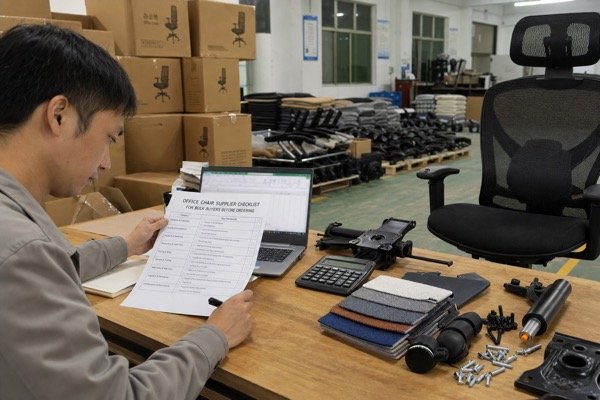
A good supplier conversation should feel clear, practical, and specific. I do not only ask for the lowest price. I ask questions that show whether the supplier understands bulk orders, quality risk, export documents, and long-term cooperation.
Why Should Buyers Prepare Questions Before Contacting an Office Chair Supplier?
Many buyers lose time because they ask general questions and receive general answers from suppliers.
I prepare supplier questions before ordering because office chairs have many hidden cost points, including material grade, foam density, mechanism quality, packaging strength, testing needs, and container loading efficiency.
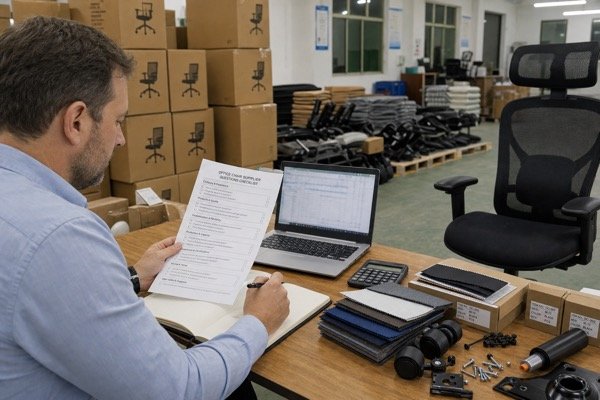
When I check an office chair supplier, I want to see how they answer under detail. A reliable supplier should explain product structure, production schedule, customization limits, test options, and export process. If every answer is vague, I treat it as a warning sign.
Here are the 15 questions I recommend asking before you place a sample order or bulk order.
| No. | Question | Why It Matters |
|---|---|---|
| 1 | Are you a factory or trading company? | It affects price control, production response, and customization ability. |
| 2 | What is your MOQ? | It helps buyers plan trial orders and market testing. |
| 3 | What is your monthly production capacity? | It shows whether the supplier can support repeat orders. |
| 4 | Can you provide samples? | It helps confirm comfort, materials, and workmanship. |
| 5 | What materials are used? | It affects price, durability, and customer complaints. |
| 6 | Can the chair pass BIFMA-related testing? | It matters for strength and durability requirements. |
| 7 | What certifications can you support? | It supports import, retail, and compliance checks. |
| 8 | How do you control quality? | It reduces defect risk before shipment. |
| 9 | What customization do you offer? | It affects branding, packaging, colors, and product positioning. |
| 10 | What is the real lead time? | It helps buyers avoid stock gaps. |
| 11 | How many chairs fit in a container? | It affects landed cost. |
| 12 | How is the chair packed? | It affects damage rate during shipping. |
| 13 | What payment terms do you accept? | It affects cash flow and order security. |
| 14 | What after-sales support do you provide? | It affects replacement cost and customer service. |
| 15 | Can you give a full quotation breakdown? | It helps compare suppliers fairly. |
1. Are You a Factory or a Trading Company?
A low price is not always a factory price. Some suppliers are only passing messages between buyer and factory.
I ask this first because a real office chair factory usually has better control over production schedule, sample changes, material confirmation, and urgent order response.
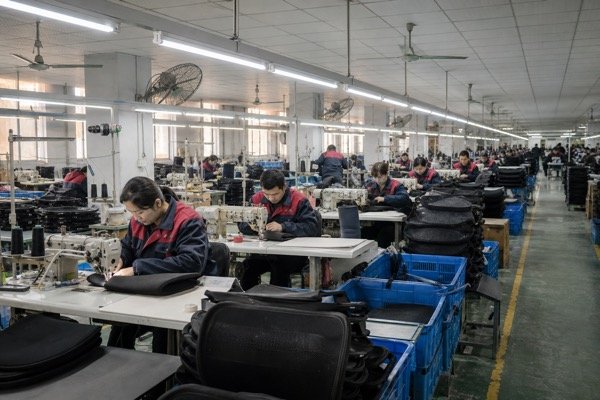
I do not think every trading company is bad. Some trading companies are professional and helpful. But I need to know the real role of the supplier. If I need OEM/ODM office chairs, custom fabric, custom logo, or mixed-model container loading, factory control becomes very important.
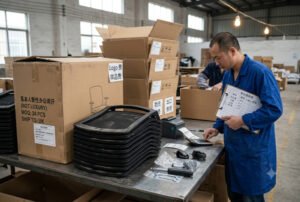
I usually ask for workshop photos, production videos, factory address, production capacity, and product categories. I also ask whether the supplier has its own cutting, sewing, assembly, and packing process. For office chair orders, a supplier who controls production can usually solve small problems faster.
At OfficeFurnitureBulk, we work as an office chair and gaming chair OEM/ODM manufacturer in China. We focus on bulk orders, flexible MOQ from 50 pcs, mixed styles, and regular new designs for wholesalers, retailers, brands, and e-commerce sellers.
2. What Is Your MOQ for Office Chair Orders?
MOQ can quietly decide whether a project is realistic or too risky for a first order.
I ask about MOQ early because some suppliers only accept large orders, while others can support small trial orders before the buyer commits to a full container.
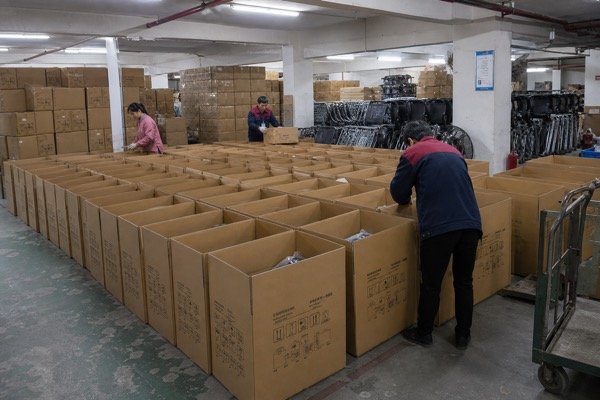
For new buyers, I prefer a supplier who can support a practical trial order. A small MOQ helps test product quality, local demand, packaging, and customer feedback. For example, an MOQ starting from 50 pcs can help a buyer test one model before scaling up.
I also ask whether the MOQ is per model, per color, per fabric, or per logo. This detail matters. A supplier may say “low MOQ,” but the real rule may require 50 pcs per color or 100 pcs per fabric. That changes the buying plan.
A clear MOQ answer should include model MOQ, color MOQ, packaging MOQ, logo MOQ, and sample order rules. If I plan a mixed container, I also ask how many models can be loaded together.
3. What Is Your Monthly Production Capacity?
A supplier may handle one small order well but fail when repeat orders increase.
I ask about monthly capacity because stable supply is more important than one successful sample. A good supplier should explain realistic output and peak-season limits.
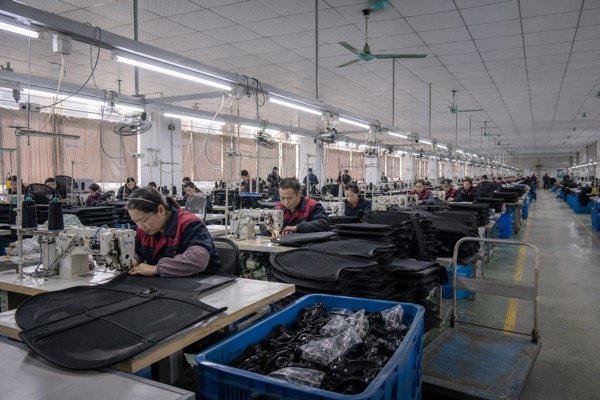
Capacity matters when buyers sell through Amazon, retail stores, project channels, or wholesale distribution. Stock shortage can damage customer trust. Late shipment can also increase storage, freight, and promotion costs.
I ask for normal monthly capacity and peak-season capacity. I also ask how the supplier handles urgent orders, material stock, and production line planning. A supplier with around 100,000 chairs monthly capacity can usually support regular container demand better than a very small workshop.
I also check whether the supplier has stable material partners for foam, fabric, mesh, mechanisms, bases, and gas lifts. Office chair production depends on many parts. If one part is delayed, the whole order can stop.
4. Can You Provide Samples Before Bulk Production?
A catalog photo cannot show the real sitting feeling, foam recovery, fabric touch, or assembly details.
I always ask for samples because office chair comfort and quality must be checked physically before a buyer confirms bulk production.
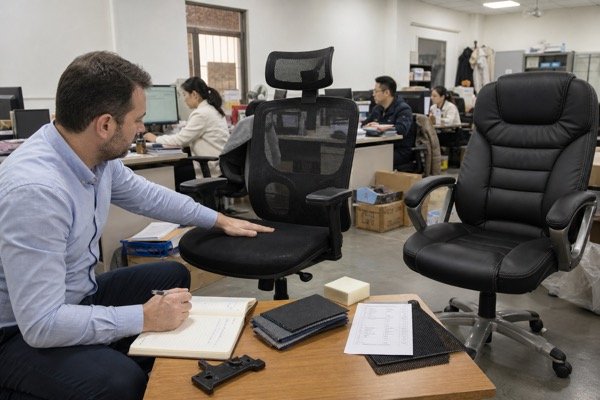
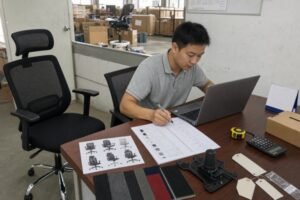
I suggest checking at least one sample before a new bulk order. During sample review, I look at sitting comfort, seat width, back support, armrest height, gas lift movement, base strength, wheel smoothness, fabric tension, sewing line, and carton protection.
I also ask whether the sample can be made with final materials. Some suppliers send a sample with better materials than bulk production. That creates risk. I prefer to confirm the exact fabric, foam, mechanism, gas lift, base, caster, and packaging before mass production.
If the buyer needs private label products, I also check logo position, carton mark, instruction manual, and barcode label during the sample stage.
5. What Materials Are Used in the Chair?
Two chairs can look similar in photos but have very different cost and durability.
I ask for material details because fabric grade, foam density, mechanism thickness, gas lift class, and base type strongly affect the final chair quality.
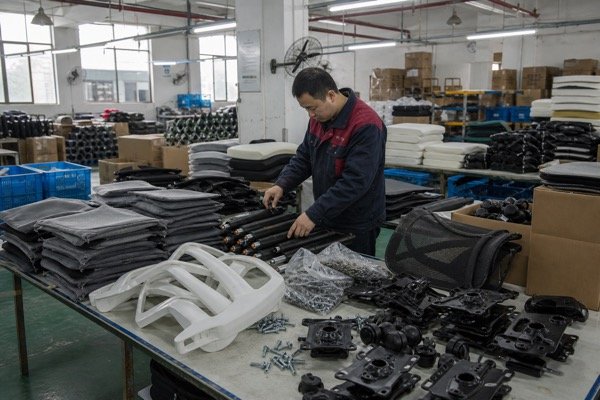
For office chairs, I usually ask about these material points:
| Part | Questions I Ask | Risk If Ignored |
|---|---|---|
| Fabric or mesh | What grade is used? Can I choose color? | Color difference, weak tension, fast wear |
| Foam | What density and thickness? | Seat collapse, poor comfort |
| Mechanism | What function and plate thickness? | Noise, shaking, short service life |
| Gas lift | What class and supplier? | Safety risk, height failure |
| Base | Nylon, chrome, or aluminum? | Breakage, weak load support |
| Casters | For carpet or hard floor? | Poor movement, floor complaints |
I prefer suppliers who explain material options by price level. This helps buyers choose models for different markets. A budget chair for online sale may need a different material plan from a project chair for office use.
6. Can the Chair Support BIFMA-Related Testing?
Some buyers need more than a nice design. They need strength, stability, and durability support.
I ask about BIFMA-related testing because many importers, brands, and project buyers use these standards as a reference for office seating performance.
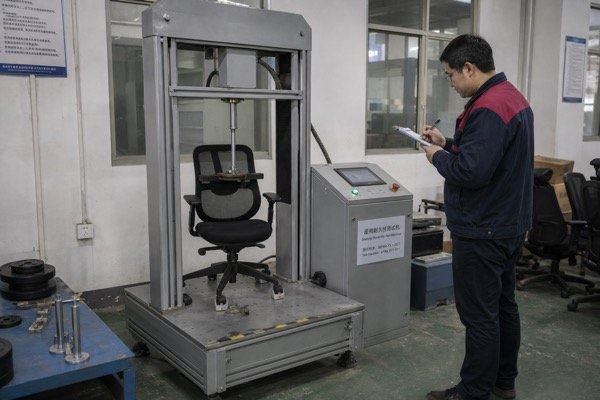
BIFMA publishes furniture standards used by many commercial furniture buyers. I often refer buyers to the official BIFMA standards page when they want to understand the role of seating performance tests.
I do not treat testing as a simple logo on a catalog. I ask which model was tested, which version of the standard was used, which lab issued the report, and whether the tested structure matches the chair I plan to order.
This is important because changing the mechanism, base, gas lift, or armrest may affect test relevance. If I buy a chair based on a test report, I want the supplier to confirm that the bulk production configuration matches the tested sample as closely as possible.
7. What Certifications and Compliance Documents Can You Support?
A missing document can slow down import, platform listing, or retail approval.
I ask about certificates before ordering because different markets may need different compliance support, especially for chairs with electrical parts or special material requirements.
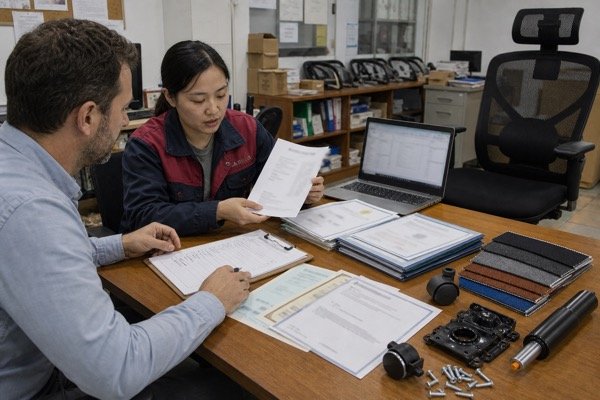
For normal office chairs, buyers may ask for BIFMA-related test reports, material test reports, factory audit documents, or quality system documents. For chairs with electrical components, such as massage gaming chairs or chairs with LED parts, compliance questions become more important.
For European buyers, I recommend checking official information about CE marking and RoHS when electrical components are involved. CE marking is not a general quality award. It relates to specific product requirements. RoHS restricts hazardous substances in electrical and electronic equipment.
For factory management, some buyers also ask about ISO 9001, which relates to quality management systems. I always check whether the document matches the supplier name, product scope, and valid date.
8. How Do You Control Quality During Production?
Final inspection alone is not enough. Many defects should be prevented before packing.
I ask about quality control because office chair defects often come from material mismatch, loose screws, weak packaging, poor sewing, or unstable assembly process.
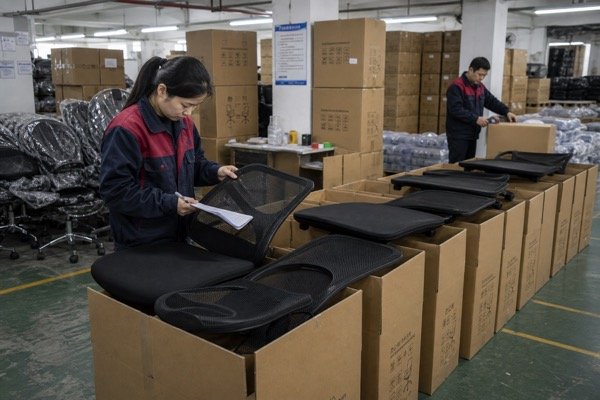
A useful quality control answer should include incoming material inspection, production line checks, assembly checks, function tests, carton drop protection, and final random inspection. I also like to ask whether the supplier can send production photos and inspection videos during the order.
For office chairs, I pay attention to these details:
| QC Stage | What I Check |
|---|---|
| Before production | Confirm sample, BOM, color, fabric, logo, carton mark |
| Material arrival | Check fabric color, foam, mechanism, gas lift, base, casters |
| During production | Check sewing, drilling, assembly, screw matching |
| Before packing | Check function, height adjustment, tilt, noise, appearance |
| Before shipment | Check carton strength, labels, quantity, loading plan |
A good factory should not be afraid of clear quality requirements. Clear requirements reduce misunderstanding for both sides.
9. What OEM/ODM Customization Can You Offer?
Customization sounds simple, but each change affects cost, MOQ, time, and quality control.
I ask about customization limits because buyers often need private label chairs, but not every supplier can handle fabric, color, logo, packaging, and structure changes smoothly.
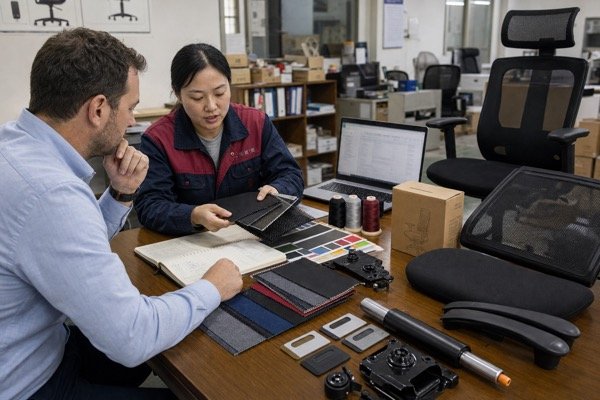
For office chair OEM/ODM projects, I usually ask about these options:
| Custom Item | Common Options |
|---|---|
| Color | Black, grey, blue, red, custom fabric color |
| Material | Mesh, fabric, PU leather, PVC, mixed material |
| Logo | Embroidery, woven label, printed label, carton logo |
| Packaging | Brown carton, color carton, mail-order packaging |
| Structure | Armrest type, base type, mechanism, gas lift |
| Documents | Manual, barcode, SKU label, carton mark |
I prefer suppliers who explain which changes are easy and which changes need new tooling, higher MOQ, or longer lead time. For example, changing a fabric color may be easy, but changing a plastic armrest shape may require mold cost.
10. What Is the Real Lead Time for Samples and Bulk Orders?
A short lead time in a quotation may not include material preparation or peak-season delay.
I ask for real lead time because office chair orders depend on material stock, production schedule, packaging confirmation, and container booking.
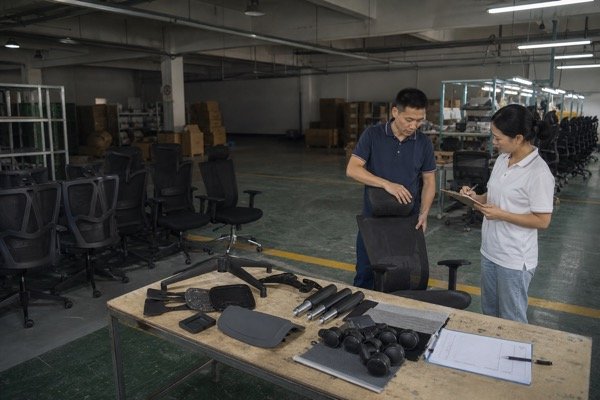
I usually separate lead time into sample lead time, pre-production confirmation time, mass production time, inspection time, and loading time. This makes the schedule easier to manage.
For example, a supplier may say production takes 25 days. But if custom fabric takes 10 days, packaging artwork takes 5 days, and inspection takes 2 days, the real timeline is longer.
I also ask what happens if the order is placed before a holiday or during peak season. In China, buyers should plan carefully around Chinese New Year because production and material supply can slow down before and after the holiday.
11. How Many Office Chairs Can Fit in a Container?
The cheapest unit price is not always the lowest landed cost.
I ask about loading quantity because carton size and knock-down structure can change freight cost per chair, especially for bulky office chairs.
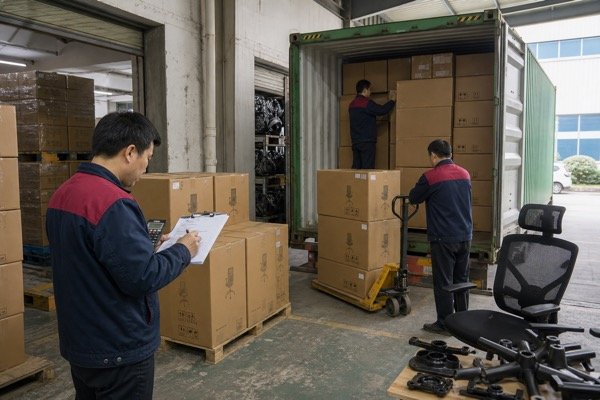
For office chair buyers, loading quantity is a key part of cost calculation. A chair with a large carton may look cheap at factory price but become expensive after ocean freight. I ask for carton size, gross weight, net weight, and estimated loading quantity for 20GP, 40GP, and 40HQ containers.
I also ask whether the supplier can mix models in one container. Mixed-model loading helps buyers test more styles or serve different customer groups. But it needs careful packing list control.
At OfficeFurnitureBulk, we often help buyers calculate loading quantity before they confirm the order. This helps compare models by landed cost, not only FOB price.
12. How Is the Chair Packed for Export Shipping?
Weak packaging can turn a profitable order into a complaint problem.
I ask about packaging because office chairs have many parts that can scratch, bend, or break during long-distance shipping.
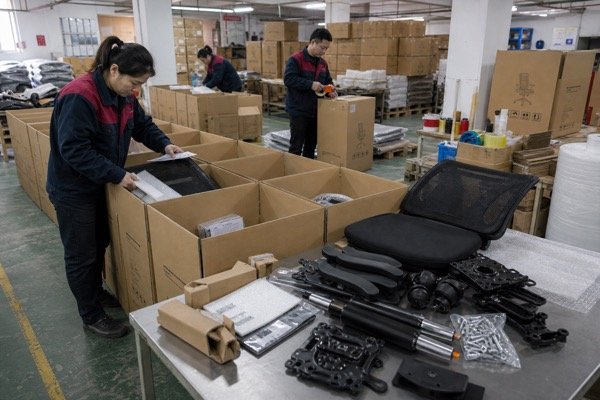
I check carton thickness, inner protection, part separation, screw bag fixing, instruction manual, carton mark, and drop-test support if needed. For e-commerce buyers, packaging is even more important because one carton may ship directly to the final customer.
A good supplier should know the difference between normal wholesale packaging and mail-order packaging. Mail-order packaging often needs stronger carton material, better corner protection, and tighter part fixing.
I also ask whether spare parts can be included, such as screws, wheels, or gas lift covers. Small spare parts can reduce after-sales pressure.
13. What Payment Terms Do You Accept?
Payment terms affect risk, trust, and cash flow for both sides.
I ask about payment terms because a clear payment structure helps avoid misunderstanding before production starts.

Common payment terms may include deposit before production and balance before shipment. The exact terms depend on order size, customization level, and cooperation history. For first orders, I prefer simple and clear terms.
I also ask what documents the supplier provides before balance payment. Useful documents may include production photos, packing list, commercial invoice, inspection report, and loading photos.
For customized chairs, the supplier may need a higher deposit because materials, logo, packaging, or molds are prepared for one buyer. I think this is reasonable if the supplier explains the cost clearly.
14. What After-Sales Support Do You Provide?
Every bulk order may have small issues. The key is how the supplier handles them.
I ask about after-sales support because replacement parts, complaint response, and defect analysis are important for long-term office chair business.
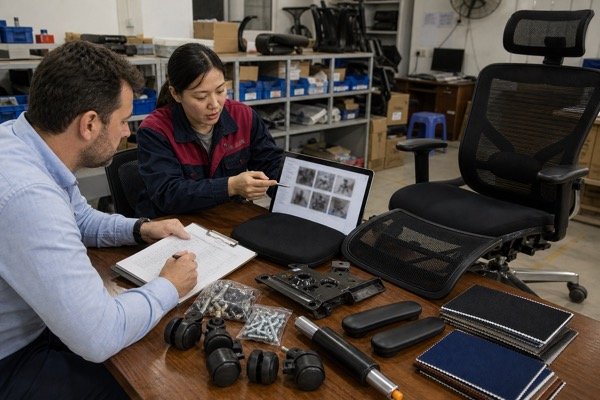
I do not expect zero problems forever. I expect a supplier to respond quickly, check the reason, and provide a practical solution. For office chairs, common after-sales issues may include missing screws, broken casters, gas lift problems, armrest damage, fabric wrinkles, or carton damage.
I ask whether the supplier can provide spare parts with the order. I also ask how they handle quality claims. A professional supplier should ask for photos, videos, batch numbers, carton marks, and quantity details. This helps identify whether the issue came from production, packing, shipping, or final handling.
A supplier who avoids every complaint is risky. A supplier who analyzes problems is much better for long-term buying.
15. Can You Give a Full Quotation Breakdown?
A simple unit price is not enough for serious supplier comparison.
I ask for a full quotation breakdown because buyers need to compare material, function, packaging, MOQ, lead time, loading quantity, and payment terms together.
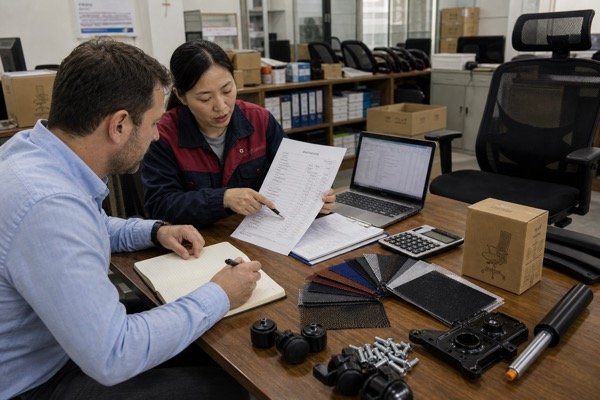
When I compare office chair suppliers, I prefer a quotation that includes:
| Item | What I Want to See |
|---|---|
| Model number | Clear product reference |
| Product photo | Same model as quoted |
| Unit price | Based on exact configuration |
| MOQ | Per model, color, or fabric |
| Materials | Fabric, foam, mechanism, gas lift, base, casters |
| Carton size | Needed for freight calculation |
| Loading quantity | 20GP, 40GP, 40HQ if possible |
| Sample cost | Including sample lead time |
| Bulk lead time | After deposit and artwork approval |
| Payment terms | Clear deposit and balance terms |
| Certification support | Relevant documents if needed |
| Custom options | Logo, color, package, structure |
This breakdown makes price comparison much more honest. A lower price may come from thinner foam, cheaper mechanism, weaker base, or smaller packaging protection. Once I compare the full structure, I can choose the right supplier with less risk.
Office Chair Supplier Checklist Before Ordering
Buyers need a simple checklist before sending an inquiry.
I use a supplier checklist to make sure every important point is confirmed before sample order, bulk order, production, inspection, and shipment.
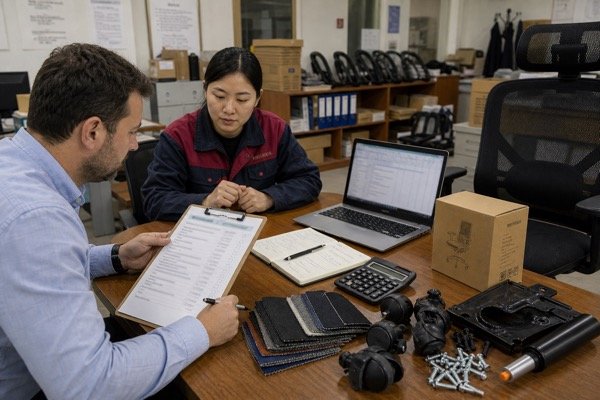
Here is a practical checklist I would use before ordering:
| Checklist Item | Confirmed? |
|---|---|
| Supplier type confirmed: factory or trading company | |
| Factory address and main product category checked | |
| MOQ confirmed by model, color, and logo | |
| Sample cost and sample lead time confirmed | |
| Final material specification confirmed | |
| Chair function and structure confirmed | |
| BIFMA-related test support checked if needed | |
| CE/RoHS checked if electrical parts are included | |
| Packaging method and carton size confirmed | |
| Loading quantity calculated | |
| Production lead time confirmed | |
| QC process agreed before production | |
| Payment terms confirmed | |
| Spare parts and after-sales policy discussed | |
| Final quotation breakdown received |
Download Supplier Checklist
If you are comparing office chair suppliers, I recommend downloading a supplier checklist before sending inquiries. It helps you collect the same details from each supplier and compare them fairly.
Get an OEM/ODM Office Chair Quotation
If you need office chairs for wholesale, retail, e-commerce, or brand projects, send your target model, order quantity, market, packaging needs, and customization ideas. I can help calculate MOQ, price range, loading quantity, and suitable chair options.
FAQ
What is the most important question to ask an office chair supplier?
I usually ask about materials and quality control first. These two points affect comfort, durability, price, and customer complaints more than photos or catalog design.
Should I ask for samples before placing a bulk office chair order?
Yes. I recommend checking samples before bulk production, especially for a new supplier, new model, custom fabric, or private label order.
What MOQ is normal for office chair suppliers?
MOQ depends on the model and customization. For flexible OEM/ODM supply, an MOQ from 50 pcs can be workable for many trial orders.
Do all office chairs need CE marking?
No. CE marking applies only to specific product categories under EU rules. If the chair has electrical components, buyers should check CE and RoHS requirements carefully.
Is BIFMA testing required for every office chair order?
Not always. BIFMA-related testing is more common for commercial projects, brand buyers, and markets where seating performance evidence is requested.
Why is container loading quantity important?
Loading quantity affects freight cost per chair. A chair with a low factory price may not be competitive if the carton size is too large.
What should I include in an office chair inquiry?
I include model photos, target quantity, market, material preference, color, logo needs, packaging type, certification needs, and expected delivery time.
Conclusion
The best office chair supplier is not only cheap. I choose the supplier who answers clearly, controls quality, and supports repeat business.