Office Chair Manufacturer vs Trading Company: How to Tell the Difference?
A Practical Guide for Buyers Comparing Factory Direct Suppliers and Trading Companies
Many buyers think factory direct always means safer and cheaper. That belief can create wrong supplier choices and weak margins.
An office chair manufacturer owns or controls production, while a trading company mainly manages sourcing, communication, and supplier matching. I tell the difference by checking production evidence, quotation details, certification documents, sample handling, and how the supplier explains real factory limits.
I do not judge a supplier only by the word “factory” or “trading company.” I care more about whether the supplier can support my market, price level, quality target, delivery plan, and after-sales needs.
What Is the Real Difference Between an Office Chair Manufacturer and a Trading Company?
Many buyers ask for “factory direct” first. The problem is that factory direct does not always mean better sourcing.
An office chair manufacturer focuses on production, tooling, materials, assembly, and quality control. A trading company focuses on supplier selection, communication, product matching, and order coordination. Both can be useful if they fit the buyer’s market position.
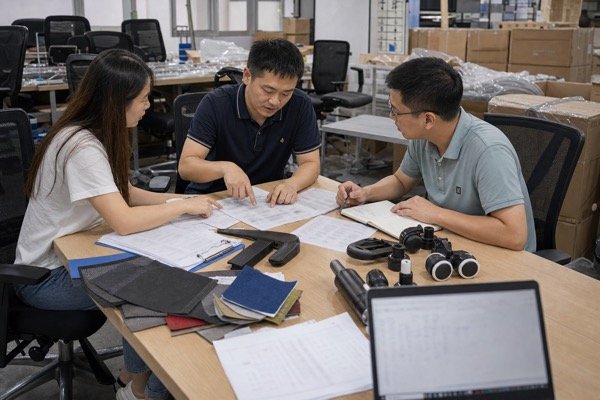
Manufacturer vs Trading Company in Daily Sourcing
I usually see manufacturers spend more time on production details. They know the mold, foam density, gas lift class, carton size, loading quantity, and production schedule. They can answer technical questions faster when the question is close to their own product line.
But I also see one common weakness. Some manufacturers are not strong at customer communication, market explanation, or fast new product development. A factory may make stable chairs every month, but it may not always understand why a European buyer needs a softer design, why a South American wholesaler needs mixed models, or why an online seller cares so much about carton strength and photo consistency.
Trading companies are different. They may not know every production process deeply, but many of them are better at service. They reply fast, compare options, prepare documents, help with product matching, and explain choices in easier words. Some trading companies also work with several factories, so they can offer more product styles than one single factory.
The key is not to treat one side as always better. I check what I really need.
| Comparison Point | Office Chair Manufacturer | Trading Company |
|---|---|---|
| Production control | Usually stronger | Depends on partner factories |
| Product range | Strong in own models | Often wider across factories |
| Communication | Can be slower or more technical | Often smoother and faster |
| New design support | Strong if it has R&D | Strong if it has many supplier options |
| Price | Not always lowest | Not always higher |
| Quality control | Direct factory QC | Needs clear inspection system |
| Best for | Stable OEM/ODM production | Product sourcing and mixed needs |
How Can I Verify an Office Chair Factory Direct Supplier?
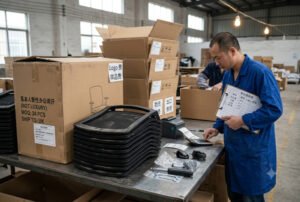
A polished website can hide weak production. A real factory should be able to show daily production, not only showroom photos.
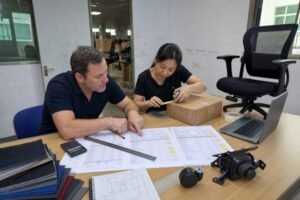
I verify an office chair factory direct supplier by checking a factory video tour, business license scope, workshop photos, production capacity, QC process, sample records, and export documents. I also ask production questions that a pure middleman may avoid.
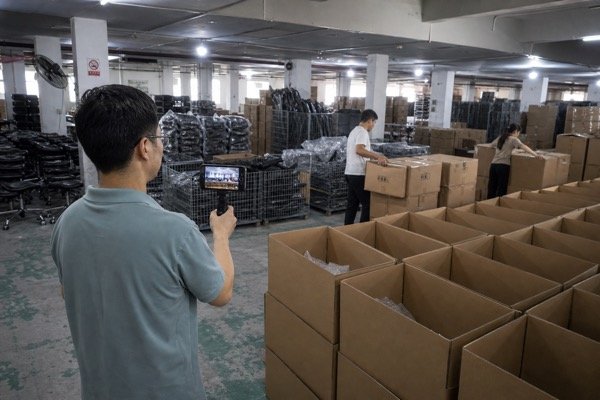
Factory Verification Checklist
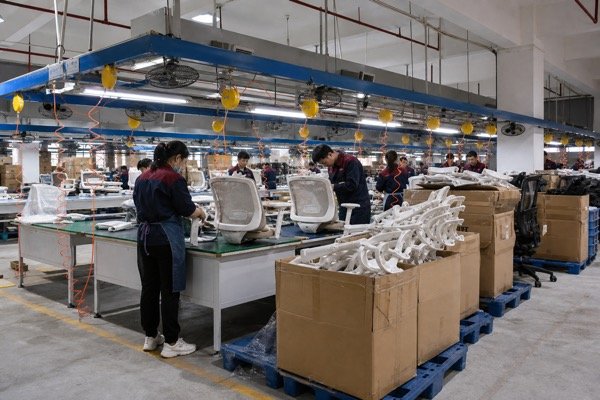
I like to start with a video tour because it is practical and fast. A real office chair manufacturer should be able to show the cutting area, sewing area, foam or upholstery work, assembly line, packing area, warehouse, and loading area. The video does not need to look like a movie. In fact, I trust normal workshop details more than perfect promotional shots.
I also ask about monthly capacity. For example, OfficeFurnitureBulk can support around 100,000 chairs per month, depending on model mix and order schedule. This number matters because a buyer who orders 50 pieces has different needs from a buyer who loads several containers per month.
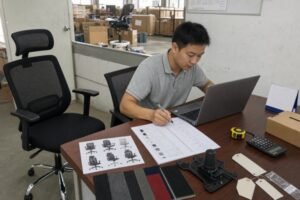
I check whether the supplier can explain quality control in simple steps. For office chairs, I care about frame strength, wheel smoothness, gas lift stability, mechanism function, armrest installation, fabric or PU surface, carton drop resistance, and final packing. If the supplier only says “quality is good,” I keep asking.
For certificates, I do not treat every PDF as proof. I check whether the document matches the product, factory name, test standard, and valid date. For European buyers, I may review official information about CE marking and RoHS when the chair includes electrical parts. For performance and safety expectations, I also look at BIFMA-related standards. For management systems, ISO 9001 can help buyers understand quality management language, but I still check the real process.
Here is the simple verification list I use:
| What I Check | Why It Matters | What I Ask For |
|---|---|---|
| Factory video tour | Confirms real production activity | Live or recent workshop video |
| Product line match | Avoids fake “we make everything” claims | Photos of similar chairs in production |
| QC process | Reduces after-sales risk | Inspection steps and sample reports |
| Capacity | Confirms delivery ability | Monthly output and lead time |
| Export records | Shows experience with overseas buyers | Main markets and shipping terms |
| Certificates | Supports compliance review | CE, RoHS, BIFMA-related, or test reports when needed |
| Packing | Reduces e-commerce and container damage | Carton size, CBM, drop test info |
Is Factory Direct Always Cheaper Than a Trading Company?
Many buyers lose money because they only compare unit price. The lowest quote may hide weak materials, poor packing, or high after-sales cost.
Factory direct is not always cheaper. A trading company may get better prices from several factories, combine models, or match a lower-cost production line. I compare total landed cost, not only the first unit price.
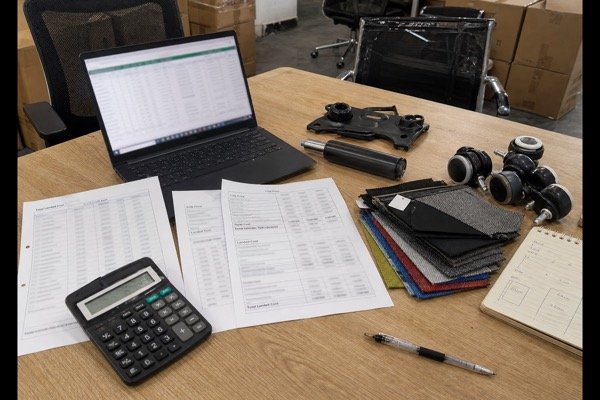
Why Price Is More Complex Than Factory vs Trading Company
I have seen manufacturers quote higher than trading companies. This can happen for normal reasons. A factory may have a fixed product line, higher labor cost, better material standard, or a smaller production schedule for one model. A trading company may have several factory options and can choose a supplier that fits the buyer’s target price better.
I have also seen the opposite. A factory can offer a very direct price when the buyer’s model matches its existing line and order quantity is enough. If the buyer wants OEM/ODM changes, such as custom fabric, logo, color, packaging, or carton design, the factory may also explain the cost more clearly because it controls production.
So I do not ask only, “Are you a factory?” I ask, “Can your quote match my market position?”
For a mid-to-low-end office chair program, I usually compare these points:
| Cost Item | Why I Check It |
|---|---|
| Chair unit price | Basic comparison point |
| MOQ | Affects cash flow and test order risk |
| Material grade | Changes comfort, durability, and return rate |
| Carton size and CBM | Affects freight cost per chair |
| Loading quantity | Affects container cost efficiency |
| Spare parts policy | Affects after-sales cost |
| Sample cost and sample time | Affects product launch speed |
| Custom packaging cost | Affects retail and e-commerce presentation |
At OfficeFurnitureBulk, I prefer to help buyers compare both chair cost and container loading result. A chair that is USD 0.50 cheaper may not be cheaper if the carton is too large and reduces loading quantity. A chair with stronger packing may look more expensive at first, but it can reduce complaints after delivery.
When Should I Choose a Manufacturer Instead of a Trading Company?
A buyer can waste weeks with the wrong supplier type. The right choice depends on order plan, product depth, and quality control needs.
I choose an office chair manufacturer when I need stable OEM/ODM production, clear material control, repeated orders, custom details, factory inspection, and direct quality responsibility. A manufacturer is stronger when production control matters more than product variety.
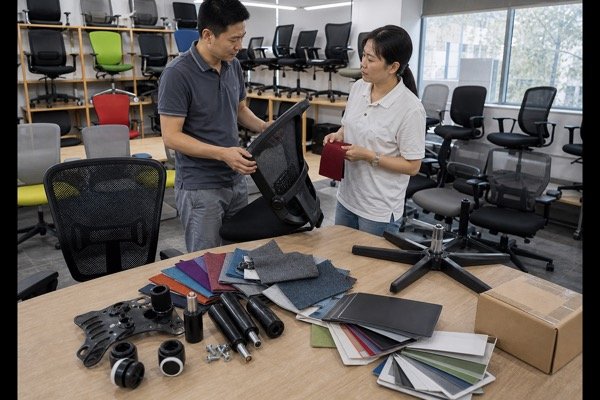
Best Situations for Choosing a Manufacturer
I prefer a manufacturer when the buyer already has a clear product direction. For example, the buyer may need mesh office chairs for wholesalers, gaming chairs for e-commerce, staff chairs for project orders, or a private label series for retail. In these cases, production details matter.
A manufacturer can help check whether a design is realistic for mass production. It can explain which base, mechanism, gas lift, caster, foam, fabric, and carton choice fits the target price. It can also support custom colors, logos, materials, and packaging when the order quantity is suitable.
For OfficeFurnitureBulk, low MOQ can start from 50 pieces for many regular models. This helps buyers test the market before scaling. For larger buyers, mixed-model container loading is also useful because they can combine several chair styles in one shipment.
I also prefer a factory when I need stronger accountability. If a mechanism has a problem, I want the supplier to know where it came from. If the carton breaks, I want the supplier to review packing design. If the seat cushion feels different from the approved sample, I want the factory to trace the material batch.
A manufacturer is usually better for these needs:
| Buyer Need | Why a Manufacturer Helps |
|---|---|
| OEM/ODM customization | Direct control over materials and production |
| Repeat orders | Stable model and process control |
| Quality improvement | Faster root-cause analysis |
| Factory audit | Easier production verification |
| Container loading | Direct carton and CBM calculation |
| Private label packaging | Better control of logo and carton details |
When Can a Trading Company Be the Better Choice?
Some buyers force themselves to buy factory direct. Then they miss better product matching and smoother service.
A trading company can be better when I need many product choices, small mixed orders, fast communication, market comparison, or a supplier who can manage several factories. Good service can be worth more than factory ownership.
Why Trading Companies Still Have Value
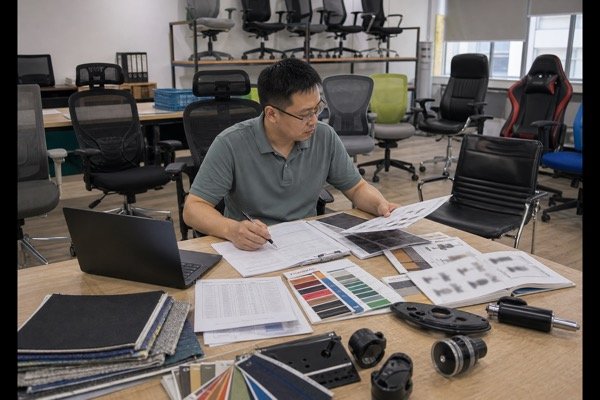
I do not look down on trading companies. A good trading company can save time. It may know which factory is strong in mesh chairs, which one is better for gaming chairs, and which one can handle cheaper project chairs. It may also speak the buyer’s language better, prepare documents more clearly, and push factories when problems happen.
For new buyers, this service can be important. A buyer may not know which chair structure fits the market. A trading company can offer 20 options quickly. A single factory may only push its own models, even if those models are not the best fit.
The risk is that some trading companies hide the factory too much. If they cannot explain production, QC, packaging, and after-sales handling, the buyer may face problems later. So I still ask for clear responsibility.
When working with a trading company, I ask these questions:
| Question | Good Sign |
|---|---|
| Which factory will produce this model? | They can explain the production source clearly |
| Can I see production photos before shipment? | They agree and arrange updates |
| Who handles after-sales problems? | They give a clear process |
| Can you provide inspection standards? | They use a written checklist |
| Can you compare 2-3 material options? | They understand price and quality levels |
| Can you support mixed models? | They can coordinate several products |
The best trading companies do not only pass messages. They manage risk. They help buyers choose the right product level for the right market.
What Questions Should I Ask Before I Place an Office Chair Order?
A supplier may sound reliable during the first chat. The real test starts when I ask detailed order questions.
Before I place an office chair order, I ask about MOQ, lead time, material options, sample policy, QC process, carton size, loading quantity, certificates, warranty handling, spare parts, and whether I can book a factory video tour.
My Practical Inquiry Checklist
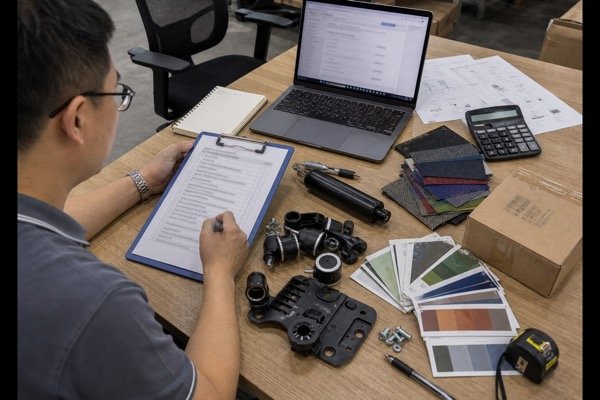
I use a checklist because office chair sourcing has many small details. If I miss one detail, the final cost may change. If I do not confirm carton size, freight cost may surprise me. If I do not confirm gas lift class, the chair may not match the buyer’s quality level. If I do not confirm spare parts, after-sales handling may become slow.
Here is the inquiry format I recommend:
| Inquiry Item | What to Confirm |
|---|---|
| Target market | Europe, South America, Asia, Middle East, or local market |
| Chair type | Mesh chair, task chair, executive chair, gaming chair, visitor chair |
| Quantity | Trial order, mixed container, or monthly repeat order |
| MOQ | Whether 50 pcs trial order is possible |
| Materials | Fabric, mesh, PU, foam, base, caster, gas lift, mechanism |
| Custom needs | Logo, color, packaging, label, manual, carton mark |
| Standards | CE, RoHS, BIFMA-related testing, or buyer’s own requirements |
| Sample | Sample fee, sample time, and sample delivery method |
| Packing | Carton size, CBM, weight, and drop protection |
| Loading | 20GP, 40HQ, or mixed-model loading calculation |
| Lead time | Sample time and mass production time |
| QC | Inspection steps before shipment |
| After-sales | Spare parts ratio and claim handling method |
For supplier selection, a 15-minute video call can show more than 20 perfect catalog pages. I want to see whether the supplier can show the workshop, warehouse, packing area, and real products without delay.
Book a Factory Video Tour
If you are comparing an office chair manufacturer vs trading company, ask us to show our production line, sample room, packing area, and loading method before you decide.
Get an OEM/ODM Office Chair Quotation
Send your target chair type, quantity, market, material level, and packaging needs. I will help you compare product cost, loading quantity, and supplier fit.
FAQ
Is an office chair manufacturer always better than a trading company?
No. I choose a manufacturer when I need production control. I choose a trading company when I need wider choices and stronger sourcing service.
Is factory direct always cheaper?
No. Factory direct can be cheaper, but not always. A trading company may get a better price from another factory or combine models more efficiently.
How do I know if a supplier is a real office chair factory?
I ask for a live factory video tour, production photos, workshop details, QC process, capacity information, and documents that match the factory name.
What should I check in an office chair quotation?
I check unit price, MOQ, material grade, carton size, CBM, loading quantity, sample cost, lead time, spare parts, and after-sales terms.
Can a trading company provide good quality office chairs?
Yes. A trading company can provide good quality if it works with reliable factories, uses clear QC standards, and takes responsibility after shipment.
What certificates should I ask for when sourcing office chairs?
I ask based on the market. For some buyers, CE, RoHS, BIFMA-related test reports, or ISO 9001-related documents may be useful. I always check whether the certificate matches the actual product.
Why should I book a factory video tour before ordering?
A factory video tour helps me see real production, packing, warehouse status, and communication ability. It reduces the risk of choosing a supplier only from photos.
Conclusion
I choose the supplier that fits my market, not the label. A good manufacturer or trading company must reduce real sourcing risk.