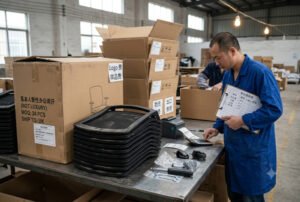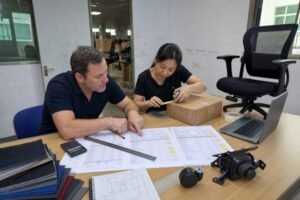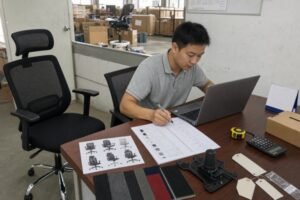
Many buyers lose money because they choose a factory only by price. The real pain comes later, when quality issues appear and nobody takes responsibility.
To choose a reliable office chair manufacturer in China, I check factory capacity, product quality, certifications, export experience, communication, after-sales attitude, and quotation details. A good supplier is not perfect. A good supplier is willing to improve, solve problems, and support my business after the order ships.
Choosing a manufacturer is not only about finding the lowest price. I have seen good factories with higher prices, and I have also seen cheap factories with no support after shipment. I do not look for a perfect factory. I look for a responsible factory that can work with me when real problems happen.
What Factory Capacity Should I Check Before Placing an Office Chair Order?
A factory may show good samples, but the real risk starts during mass production. If capacity is weak, delivery delays and unstable quality can hurt my sales plan.
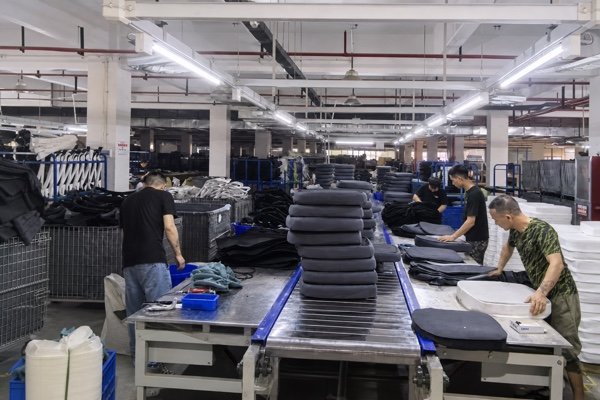
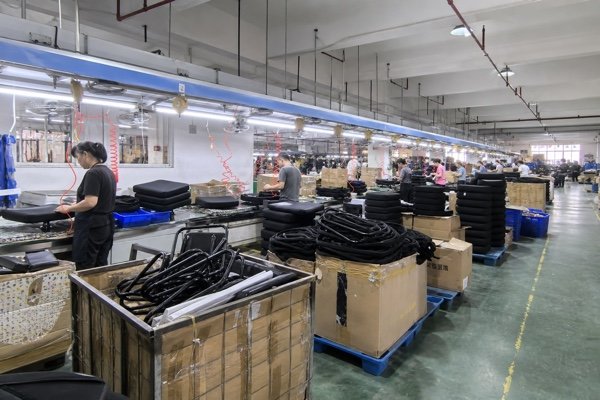
A reliable office chair factory should show clear production capacity, stable workers, enough equipment, organized assembly lines, and real loading experience. I should ask about monthly output, lead time, mixed container ability, and how the factory handles urgent or repeat orders.
Why Capacity Matters More Than a Nice Sample
A sample can be made slowly by a skilled worker. A bulk order is different. It needs material planning, production control, assembly speed, quality checks, and packing control. When I visit or review a factory, I do not only look at the showroom. I ask how many chairs they can make each month, how many lines they run, and how they manage peak season.
For example, OfficeFurnitureBulk has more than 8 years of OEM/ODM experience and a monthly production capacity of about 100,000 chairs. This matters because many buyers need stable supply, not just one beautiful product photo.
| Capacity Point | What I Ask | Why It Matters |
|---|---|---|
| Monthly output | How many chairs can you produce each month? | It shows whether the factory can support growth. |
| Production lines | How many assembly lines do you run? | It affects delivery speed. |
| MOQ | What is your minimum order quantity? | It helps small and medium buyers start safely. |
| Mixed loading | Can I mix different models in one container? | It helps reduce inventory pressure. |
| Lead time | How fast can you finish a repeat order? | It protects seasonal sales plans. |
My Simple Capacity Checklist
Before I place an order, I prefer to check these points:
- Factory production area and assembly line photos
- Monthly production capacity
- Lead time for 50, 500, and 2,000 chairs
- Loading quantity per model
- Mixed container plan
- Spare parts stock
- Packing speed and warehouse space
A factory with strong capacity does not only ship faster. It also gives me more room to adjust styles, colors, and order plans.
Which Certifications Prove an Office Chair Factory Is Reliable?
A low price is not enough if the chair cannot enter my market. Missing certification can cause sales blocks, customer complaints, and higher product risk.
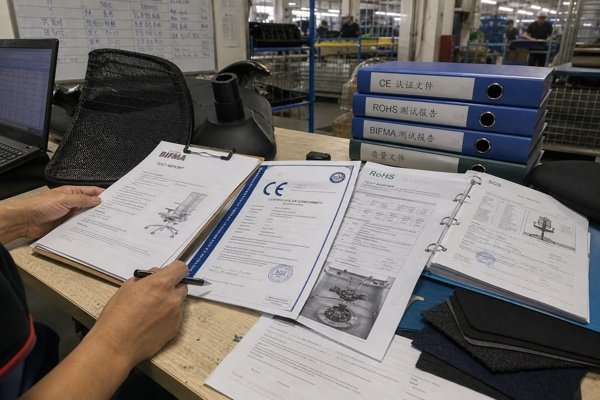
A reliable office chair manufacturer should provide valid certifications such as CE marking, RoHS, and BIFMA-related standards when needed. These certifications show that the factory understands safety, materials, strength tests, and export market rules.
Why I Do Not Treat Certifications as Decoration
Some buyers only ask for certificates after a customer requests them. I think this is risky. Certification should be part of supplier selection from the beginning. It tells me whether the factory understands the basic rules of export markets.
For office chairs and gaming chairs, buyers may need different documents based on their country and sales channel. A European buyer may ask for CE and RoHS. A buyer selling to corporate or contract markets may care about BIFMA-related standards. Some e-commerce platforms may ask for material safety documents, test reports, or product photos with packaging labels. I also see buyers ask whether the factory follows a quality management system such as ISO 9001, because it helps them understand how the factory controls process and records.
| Certification | What It Helps With | What I Still Need To Check |
|---|---|---|
| CE | Basic safety for some market needs | Whether it matches the product type |
| RoHS | Material and restricted substance control | Whether it covers the current material |
| BIFMA | Chair strength and durability reference | Whether the tested model is similar to my order |
| Factory QC records | Daily quality control | Whether the factory really follows the process |
| Material reports | Fabric, foam, gas lift, base | Whether key parts match the sample |
The Real Question Behind Certification
I do not only ask, “Do you have certificates?” I ask, “Can these documents support my product and my sales channel?” This question is more useful. Some suppliers show general documents, but the documents may not match the chair model, the component, or the latest production batch.
A responsible factory will explain what it has, what it does not have, and what can be tested if I need stronger documents. This honest answer is better than a fast “yes” with unclear proof.
How Can I Judge Product Quality Before Mass Production?
Bad quality does not always look bad in a photo. The real problems are often loose screws, weak gas lifts, poor foam, thin fabric, unstable bases, or cartons that break during transport.
I judge office chair quality by checking the sample, materials, structure, comfort, function, packaging, and QC process. I also ask for clear photos, test details, and pre-shipment inspection before the container is loaded.
My Quality Check Starts With the Parts
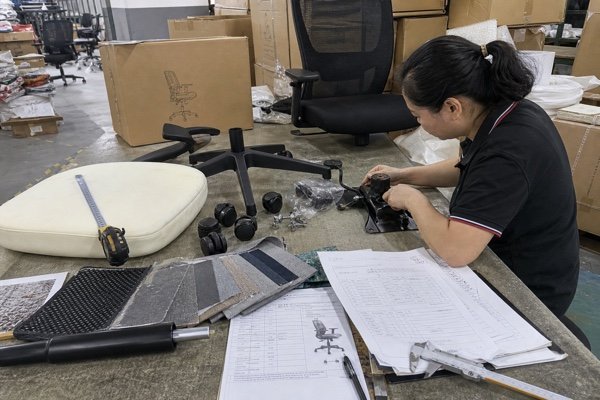
When I check an office chair, I separate it into parts. This makes the process easier. A chair is not only a seat. It is a system. The foam affects comfort. The mechanism affects use. The gas lift affects safety. The base affects stability. The carton affects shipping loss.
I also compare the sample with the final order. Many problems happen because the sample uses one material, but mass production uses another. So I ask the factory to confirm all parts before production starts.
| Chair Part | What I Check | Common Risk |
|---|---|---|
| Fabric or PU | Thickness, touch, color, smell | Color difference or peeling |
| Foam | Density and rebound | Seat becomes flat too fast |
| Gas lift | Grade and supplier | Safety and height failure |
| Mechanism | Tilt, lock, thickness | Noise or loose movement |
| Base | Nylon or metal strength | Cracking or bending |
| Castors | Smooth rolling | Poor movement or floor damage |
| Carton | Layers and size | Damage during shipping |
Pre-Shipment Inspection Is Not Optional
I always suggest checking goods before shipment. This does not mean I do not trust the factory. It means I respect the cost of a container. Once goods arrive in another country, every problem becomes more expensive.
A good office chair factory should welcome inspection. It should prepare product photos, packing photos, carton marks, and loading photos. If issues appear, the factory should help correct them before shipment.
This is where attitude becomes very important. No factory can promise zero issues forever. But a good factory will not hide problems. It will improve the process, replace parts, and discuss a solution with me.
Why Is Export Experience Important for Office Chair Buyers?
A factory may make chairs well, but export orders need more than production. If the factory does not understand containers, labels, documents, and overseas customer needs, the order can still go wrong.
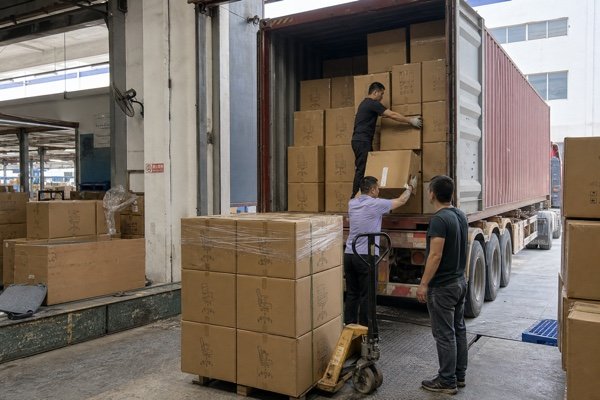
Export experience helps a manufacturer control packaging, loading quantity, documentation, delivery timing, and communication. A reliable Chinese office chair supplier should understand wholesale buyers, retailers, brand owners, and e-commerce sellers.
Export Orders Have Their Own Rules
Export experience is easy to underestimate. I have seen buyers focus only on unit price. Then they face high shipping costs because the chair loading quantity is poor. They may also receive cartons without clear marks, wrong labels, or weak packaging. These are not small issues. They affect warehouse work, retail delivery, and customer reviews.
OfficeFurnitureBulk mainly supports buyers in Europe, South America, and Asia. The main customers include brand owners, wholesalers, retailers, category managers, purchasing managers, and business owners. Many of them need middle and low-end market products with stable quality and strong price value.
| Export Point | What I Ask The Factory | Buyer Benefit |
|---|---|---|
| Loading quantity | How many chairs fit in 20GP, 40GP, and 40HQ? | Better freight cost control |
| Carton design | Can the carton pass long-distance shipping? | Lower damage rate |
| Label support | Can you print model, barcode, or brand label? | Easier warehouse management |
| Mixed models | Can you mix several chairs in one container? | More product choices |
| Documents | Can you support export documents? | Smoother import process |
Loading Quantity Can Change Real Profit
For office chair buyers, the lowest unit price is not always the lowest total cost. A chair that loads poorly can become expensive after shipping. So I ask for loading quantity calculation before I confirm an order.
This is also why mixed container service is useful. Some buyers do not want to buy one model in large quantity. They want mesh chairs, gaming chairs, visitor chairs, and executive chairs in one shipment. A flexible factory can help build a better product mix.
What After-Sales Attitude Should I Expect From a Good Supplier?
Some factories give a good price before payment, but they disappear when problems appear. This is one of the biggest risks in office chair sourcing.
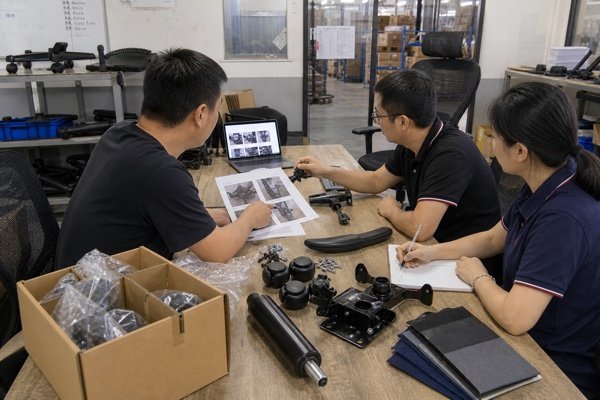
A reliable office chair manufacturer should respond quickly, review problems honestly, provide replacement parts when needed, improve future production, and work with the buyer to reduce loss. The best supplier has a responsible attitude, not only a cheap price.
I Do Not Believe In Perfect Factories
I have a simple belief after working with suppliers. There is no perfect factory. Some factories have strong quality but higher prices. Some factories have very low prices but weak service. Some factories are fast, but they may not be good at customization. Some factories are careful, but they may need more time.
So I do not ask, “Which factory has no problems?” I ask, “Which factory will face the problem with me?” This question is more real.
| Supplier Type | Good Point | Main Risk |
|---|---|---|
| High-quality factory | Stable products | Higher cost |
| Low-price factory | Easy to start | Weak after-sales support |
| Big factory | Strong capacity | Less flexible MOQ |
| Small factory | More flexible | Less stable output |
| Responsible factory | Solves problems with buyer | May not always be the cheapest |
What Responsible After-Sales Looks Like
A responsible supplier does not only say sorry. It checks the cause. It asks for photos or videos. It confirms whether the problem came from material, assembly, packing, shipping, or user operation. Then it gives a practical answer.
The solution may include spare parts, credit in the next order, improved packaging, stronger material, or a changed inspection process. I care about this attitude because my business depends on long-term supply. One container is not the whole relationship.
A good factory also keeps records. If a gas lift issue appears, it should trace the batch. If carton damage appears, it should improve the carton. If color difference appears, it should check fabric batches more carefully next time.
What Should I Include In My Inquiry To Get An Accurate Quotation?
Many buyers send only a product photo and ask for the best price. This makes the quotation unclear, and it often causes price changes later.
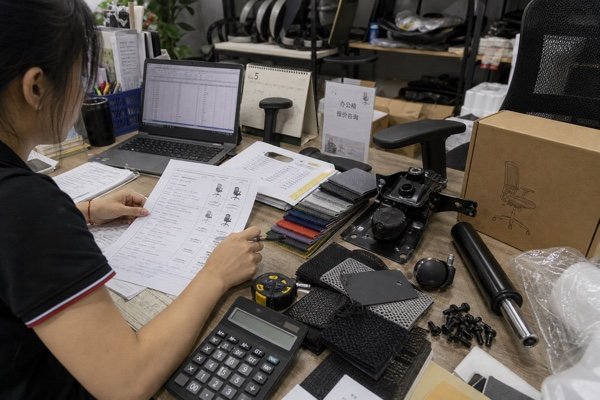
To get an accurate office chair quotation, I should send product style, quantity, target market, material request, color, packaging, logo needs, certification needs, loading plan, and expected delivery time. The clearer my inquiry is, the better the factory can quote.
A Good Inquiry Saves Time For Both Sides
When I send a serious inquiry, I try to make the factory understand my business quickly. I do not need a long document. I need clear details. If I only ask, “How much is this chair?” the supplier has to guess the material, foam, base, mechanism, carton, and quantity. A guessed quotation is not useful.
For OEM/ODM office chair orders, small changes can affect price. PU or fabric can change cost. Nylon base or metal base can change cost. Normal carton or mail-order carton can change cost. Logo, color, and packaging can also change cost.
| Inquiry Item | Example Information |
|---|---|
| Product type | Mesh office chair, gaming chair, executive chair |
| Quantity | 50 pcs, 300 pcs, 1x40HQ |
| Target market | Europe, South America, Asia |
| Material | Mesh, PU, fabric, molded foam |
| Color | Black, grey, custom color |
| Base | Nylon base or metal base |
| Mechanism | Basic tilt or multi-function |
| Packaging | Bulk carton or e-commerce carton |
| Certification | CE, RoHS, BIFMA-related need |
| Branding | Logo on chair, carton, manual |
| Delivery time | Normal order or urgent order |
A clear inquiry helps me avoid later price changes. It also helps the factory give a better answer on loading quantity, sample cost, production time, and packaging choice. If I want to compare suppliers, I use the same inquiry format for each factory. This makes the comparison fair.
Conclusion
A reliable office chair manufacturer is not perfect. I choose the factory that has capacity, quality control, export experience, and a responsible problem-solving attitude.
FAQ
How do I choose a reliable office chair manufacturer in China?
I choose a reliable office chair manufacturer in China by checking factory capacity, product quality, certifications, export experience, communication, and after-sales attitude. I do not only compare the unit price. I also check whether the supplier can solve problems responsibly after the order ships.
What factory capacity should I check before placing a bulk office chair order?
I check monthly production capacity, assembly lines, MOQ, lead time, mixed container ability, packing speed, and loading experience. These points help me know whether the factory can support repeat orders, urgent orders, and seasonal sales plans.
What certifications should a reliable office chair factory provide?
A reliable office chair factory may provide CE marking, RoHS, BIFMA-related test reports, material reports, and internal QC records. The needed documents depend on my target market, sales channel, product structure, and customer requirements.
Is the cheapest office chair supplier always the best choice?
The cheapest supplier is not always the best choice. A very low price may come from thinner materials, weaker packaging, unstable production, or poor after-sales support. I prefer a supplier with fair pricing and a responsible problem-solving attitude.
How can I check office chair quality before mass production?
I check the approved sample, fabric or PU, foam, gas lift, mechanism, base, castors, carton, and pre-shipment inspection process. I also confirm that mass production materials match the sample before the factory starts production.
Why is export experience important when buying office chairs from China?
Export experience is important because office chair orders need proper packaging, carton marks, loading plans, documents, and delivery timing. A factory with export experience can help me reduce shipping damage, improve container use, and avoid import or warehouse problems.
What information should I send to get an accurate office chair quotation?
I send the chair type, order quantity, target market, material request, color, base type, mechanism, packaging needs, certification needs, branding details, loading plan, and expected delivery time. A clear inquiry helps the factory give a more accurate price.